3 Reasons Why Chelsea LOST to Tottenham
3 Tactical Details learnt from Chelsea's defeat to Spurs
Chelsea lost to Spurs at home only the 2nd time this century, since Conte’s home loss in 17/18. From a Chelsea perspective, it was a disappointing performance, with many aspects of the play that would not please most fans, or even the manager and players themselves. From a Spurs perspective, an unreal win, with De Zerbi’s training camp sparking good results and performances from his side. We will look into 3 tactical details from the game.
Chelsea Initially tried to, but struggled to play out of the back all game.
There is an aspect to praising Spurs’ press against Chelsea. M2M, went aggressive as well too and stopped Chelsea from building up easily, but there is also the aspect of Chelsea not really attempting to play out much and not doing so with enough quality when they tried to do so. Chelsea in fact, initially didn’t try to go long. Instead, they tried to go short in the first part of the game: one successful, the other not so much because of a player mistake.
Let's take some examples to differentiate between the 2.
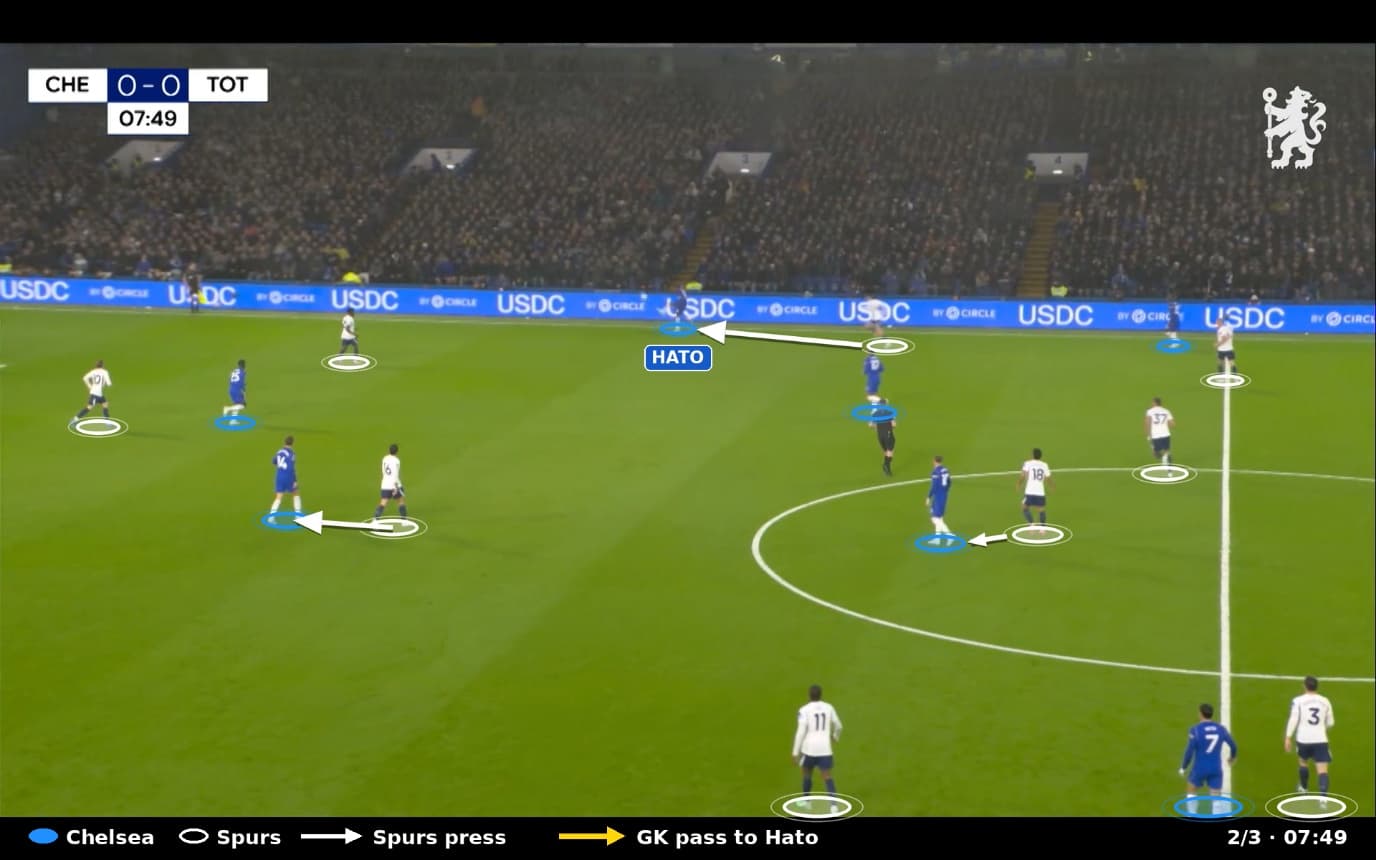
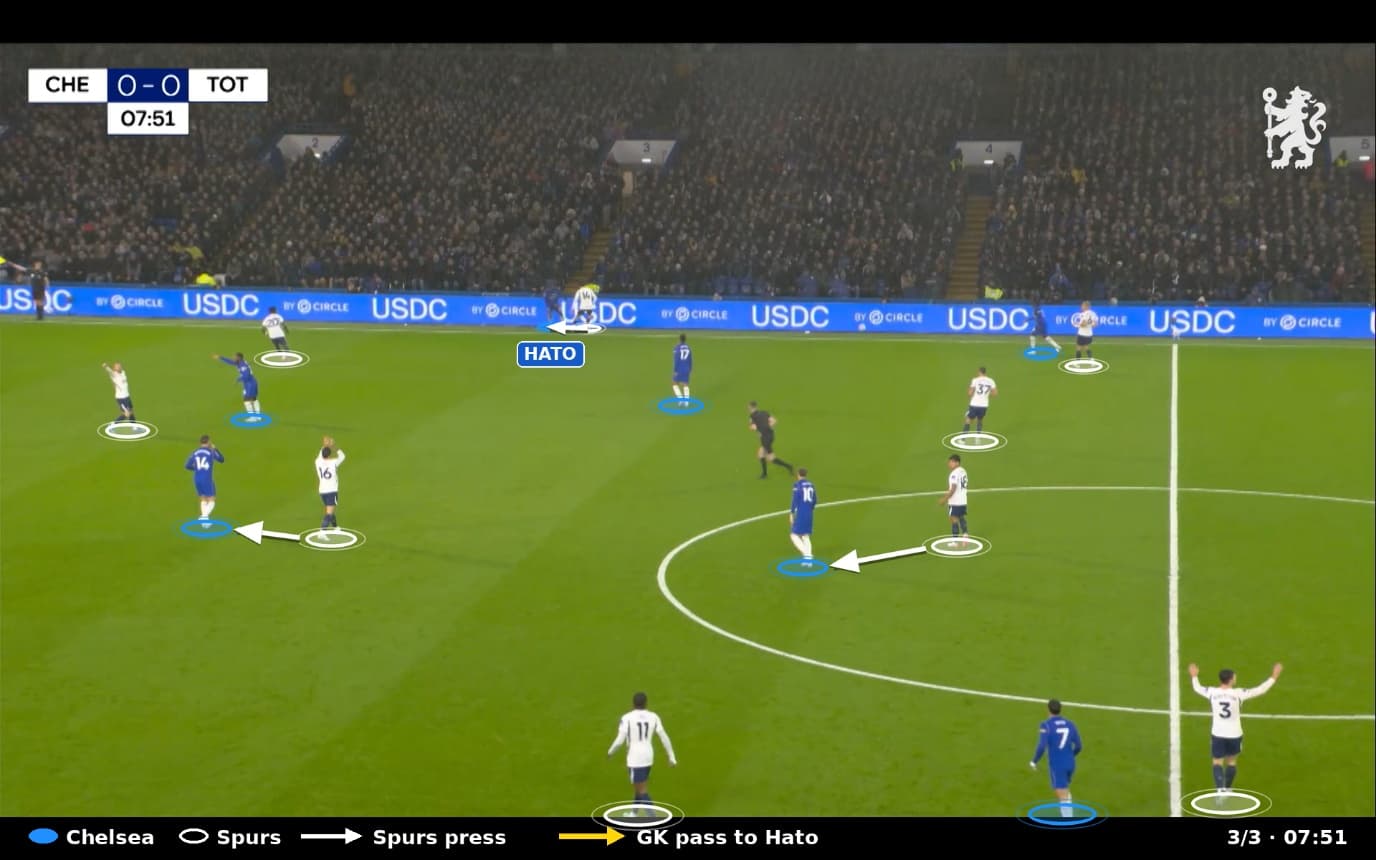
Here. Chelsea recycle play back to Penders; Spurs are marking man-to-man, which is why Chelsea were forced back.
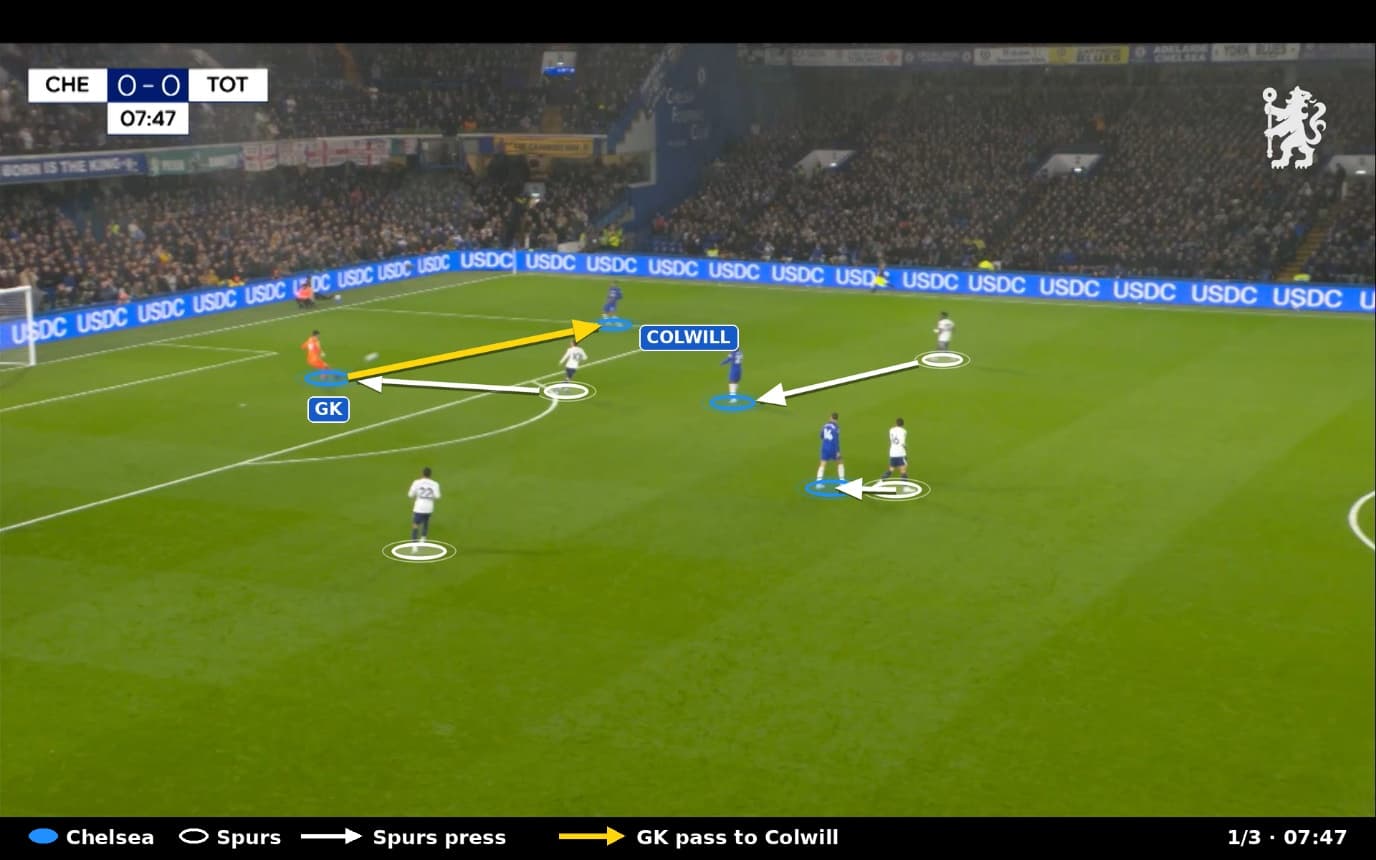
Penders has time to play it to Colwill but also takes a good option to pass an accurate pass to Hato but Hato tried to be too hasty with it and then puts it out. Chelsea could and should have easily played out there
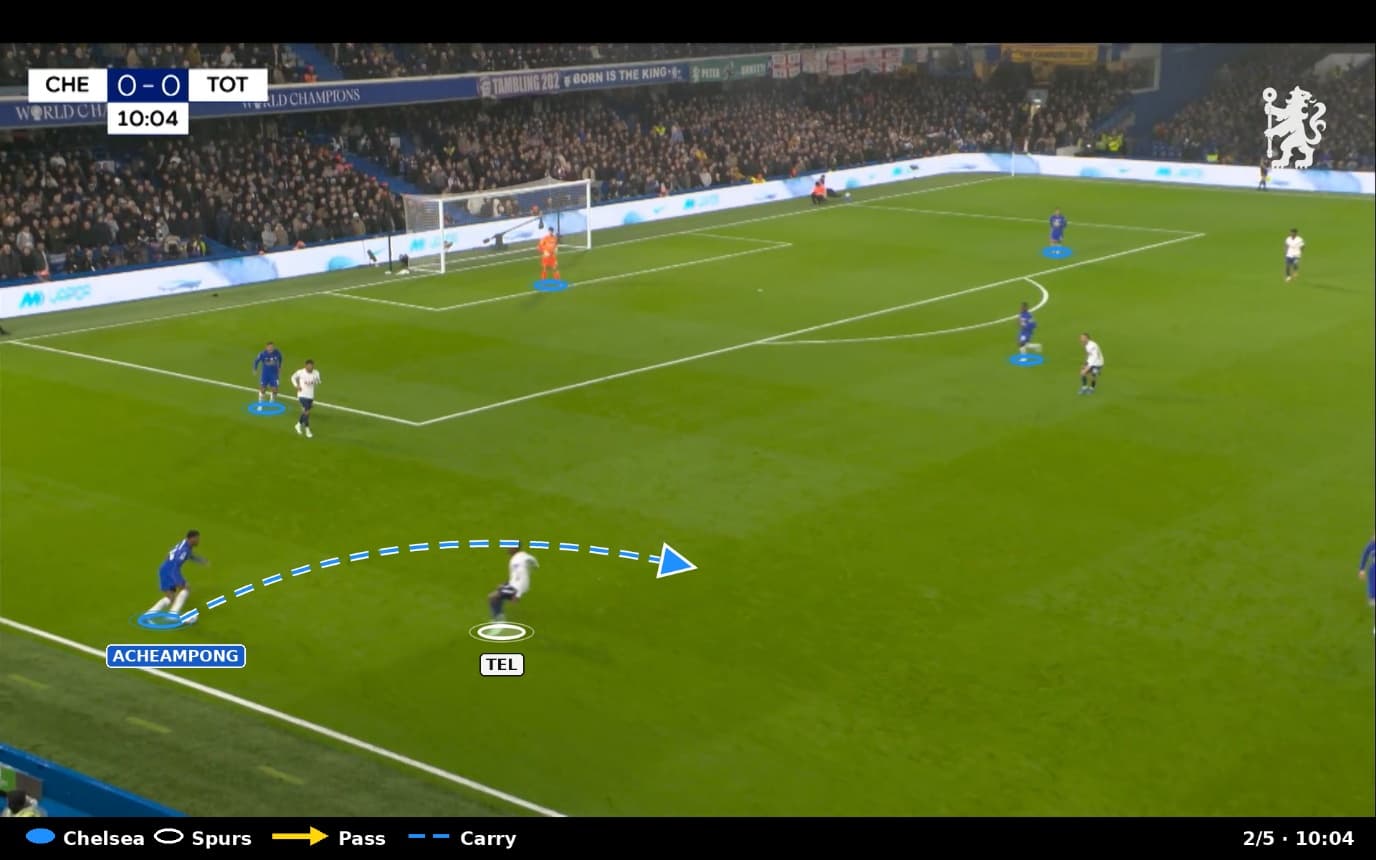
Now this is another one: Josh gets the ball and now immediately uses his carrying ability to get past Tel and gives Palmer, and Chelsea are out of the press.
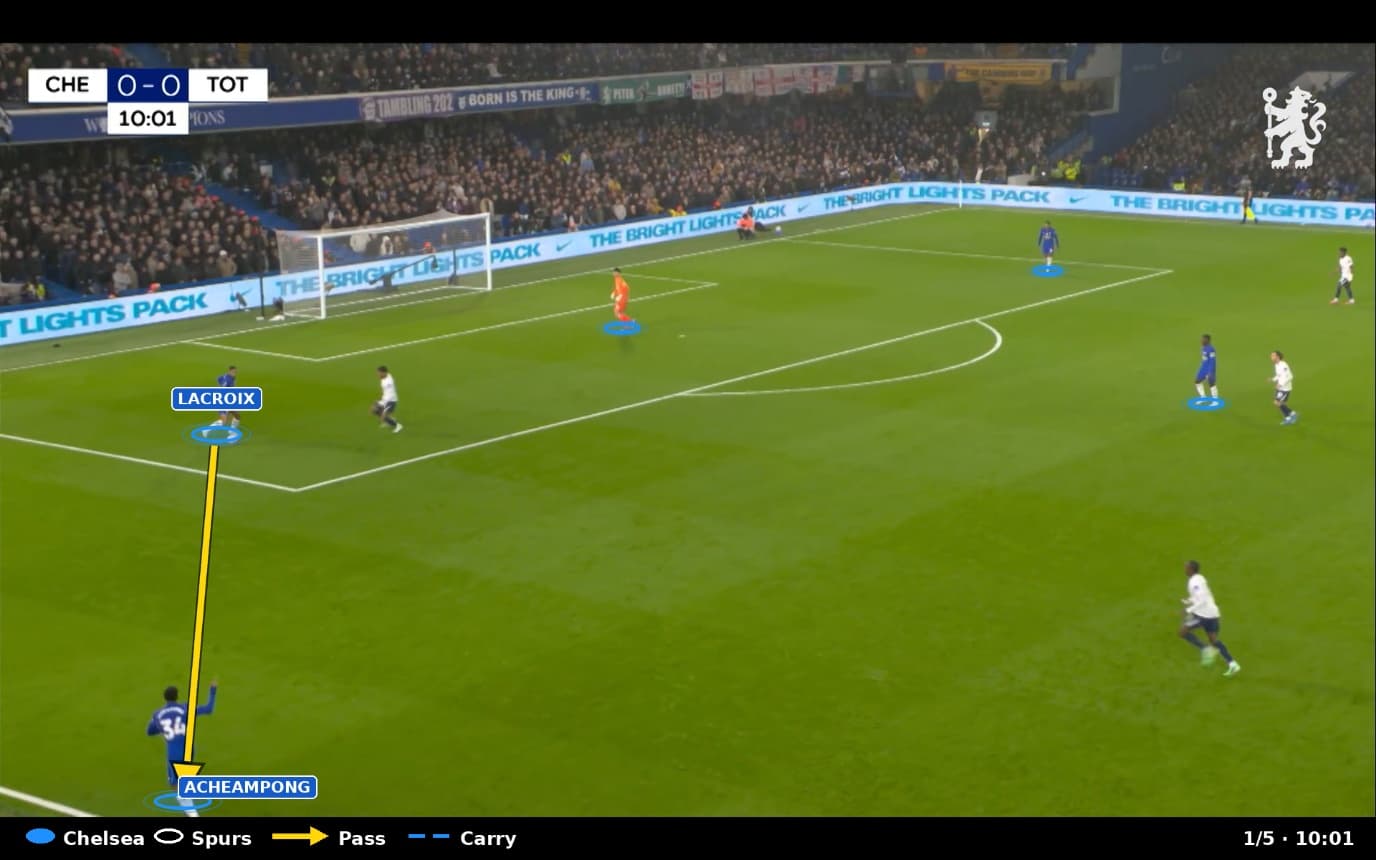
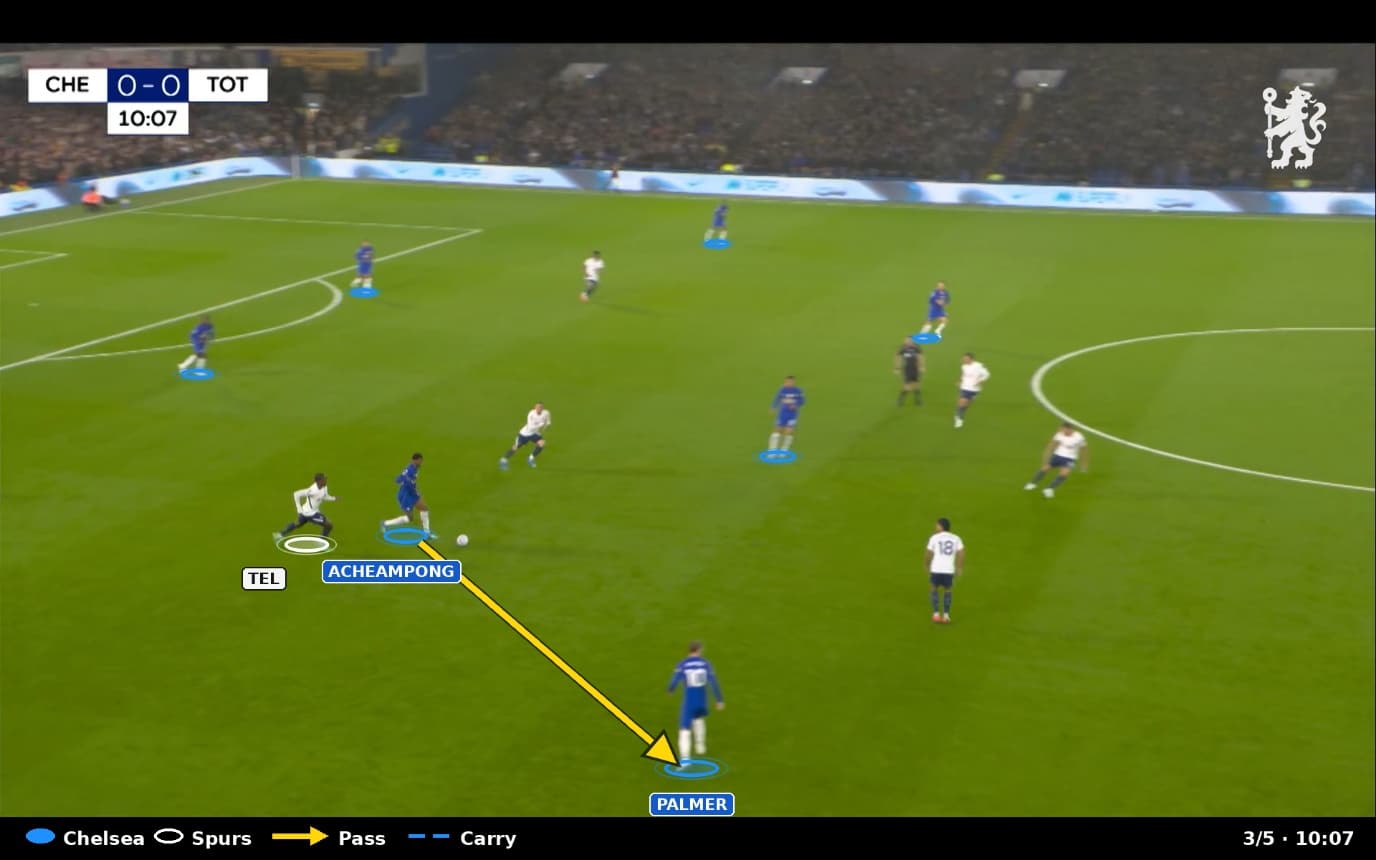
Palmer goes direct into Neto in behind but doesn’t get the pass, but good intention and direct…
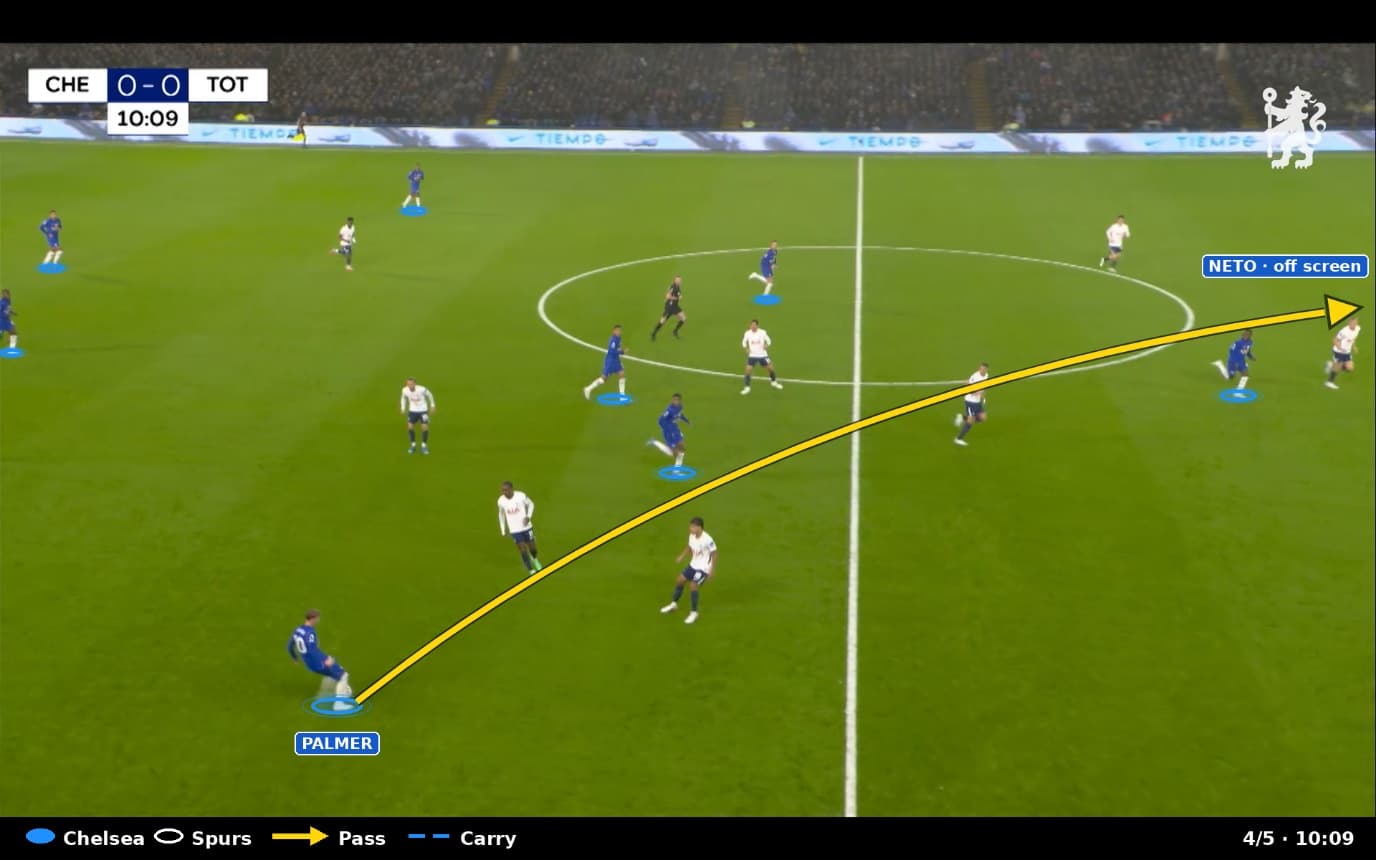
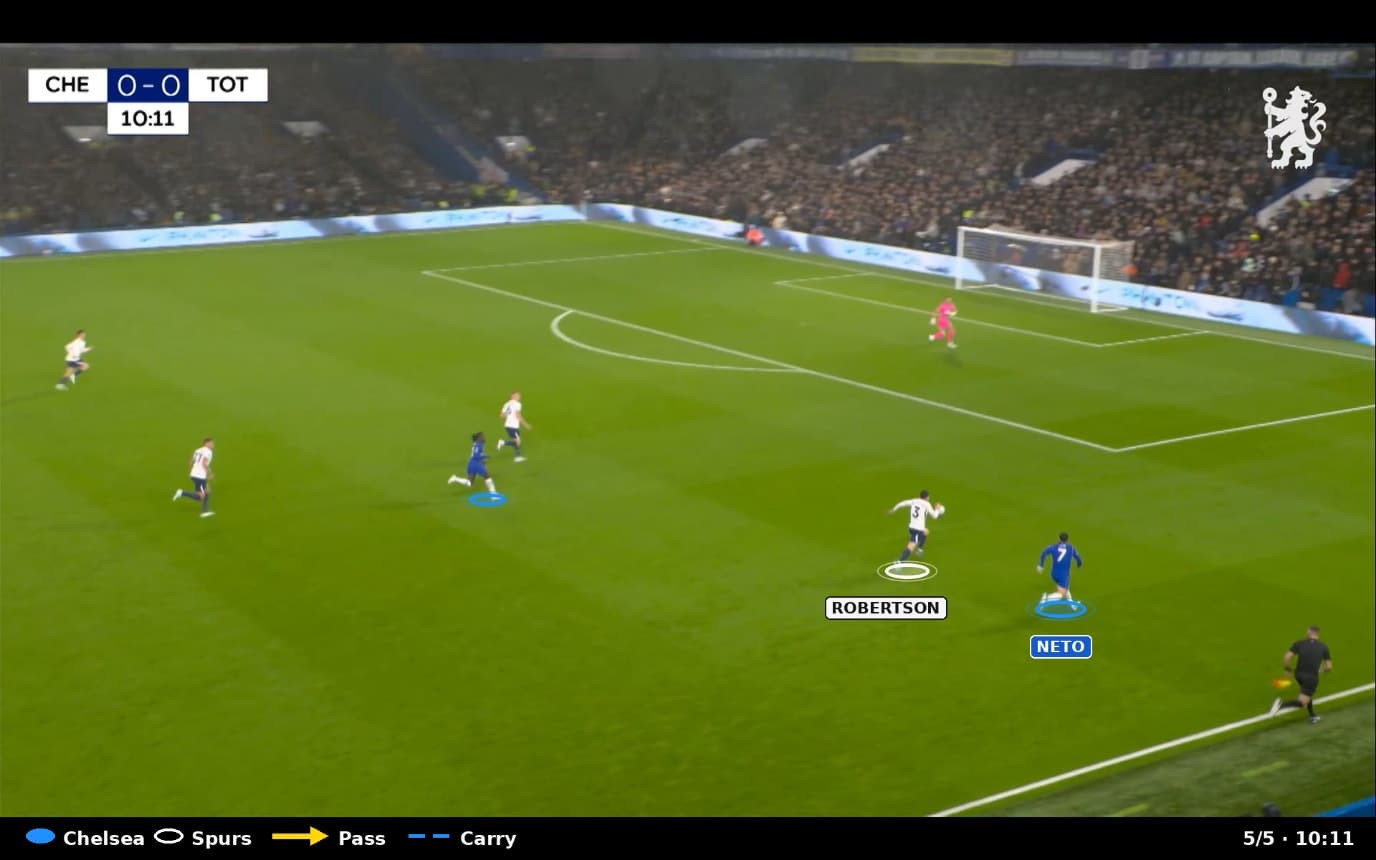
Chelsea then reverted to directness when Spurs tried to press the rest of the game and it hurt them. They kept going long instead of keeping the ball on the floor, so they could not hold possession for long enough to build pressure on Spurs. Long balls over the top are hard to win when Spurs have plenty of players around the ball, and even when Chelsea have runners, the ball takes so long to arrive that Spurs can recover their shape and get numbers back.
Each of these balls gave the ball straight back to Spurs, who then controlled the game more with it and, of course, attacked with it. The more Chelsea gave Spurs the ball, the more Spurs could control the game. It also starved the wingers. To go 1v1, they need the ball played to them in good positions and with the team around them. Long balls from deep rarely do that. So the directness limited Chelsea’s attacking threat all game, and that is why I think it is such an important point to stress.
Chelsea’s Press was more likely the most positive thing from the game amongst so little positives
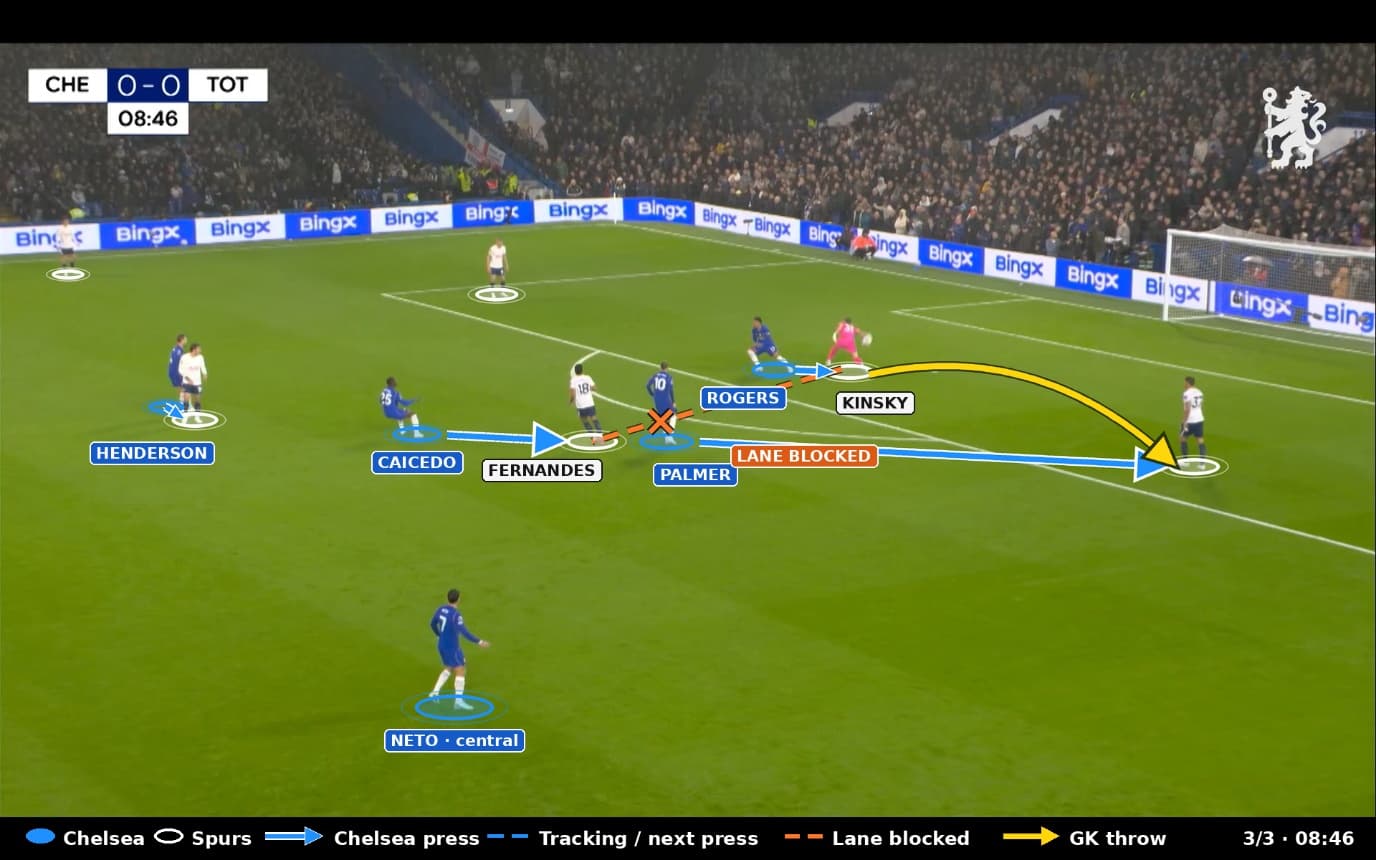
So, Xabi’s intentions in the press, the first zonal approach to press Spurs with a 4-4-2 , Rogers and Palmer up top and Palmer first blocking the passing lane to Fernandes and then going to press Van de Veen, which in turn triggers a press from Caicedo to Fernandes once Palmer does that and now it then turns into a M2M approach.
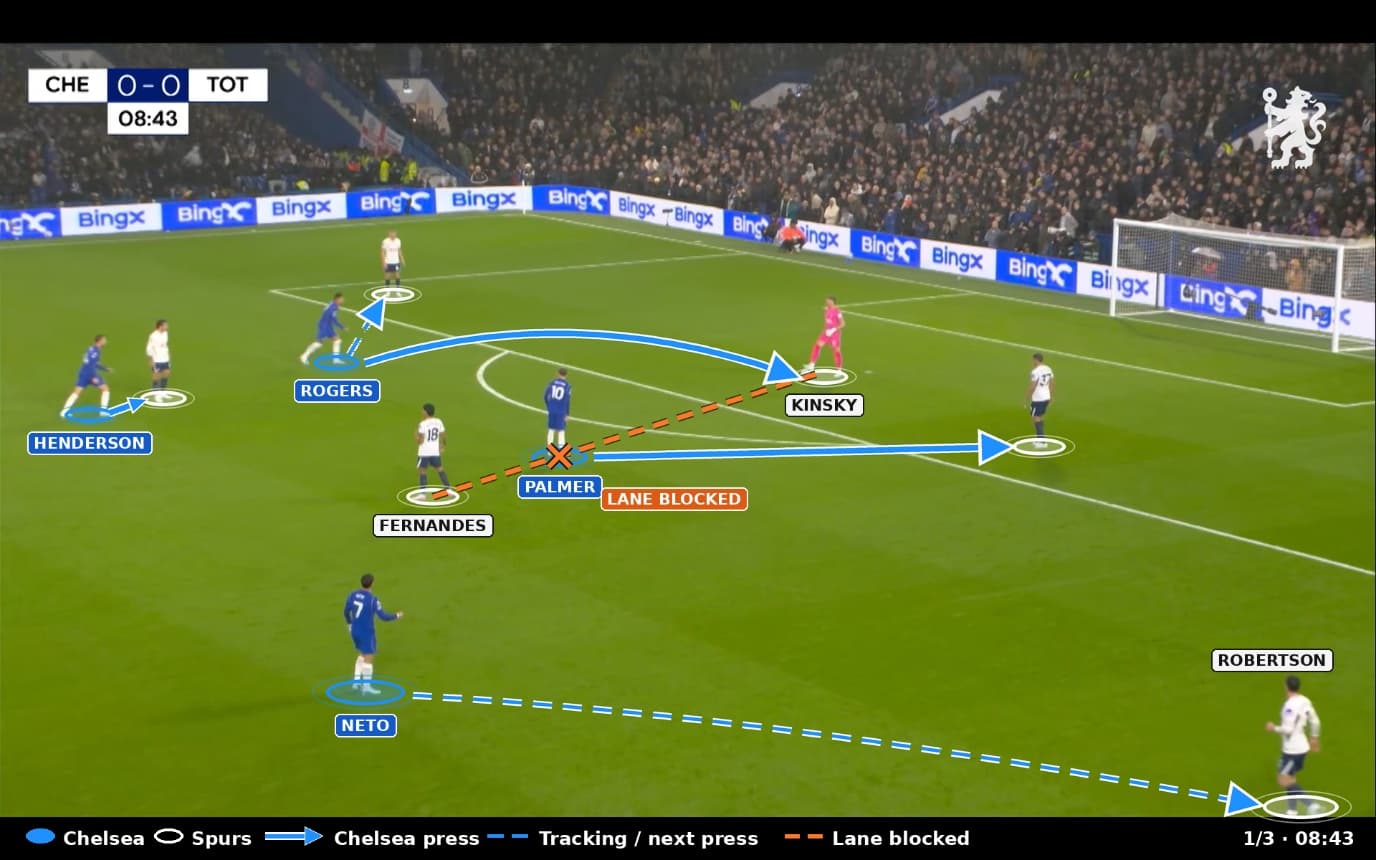
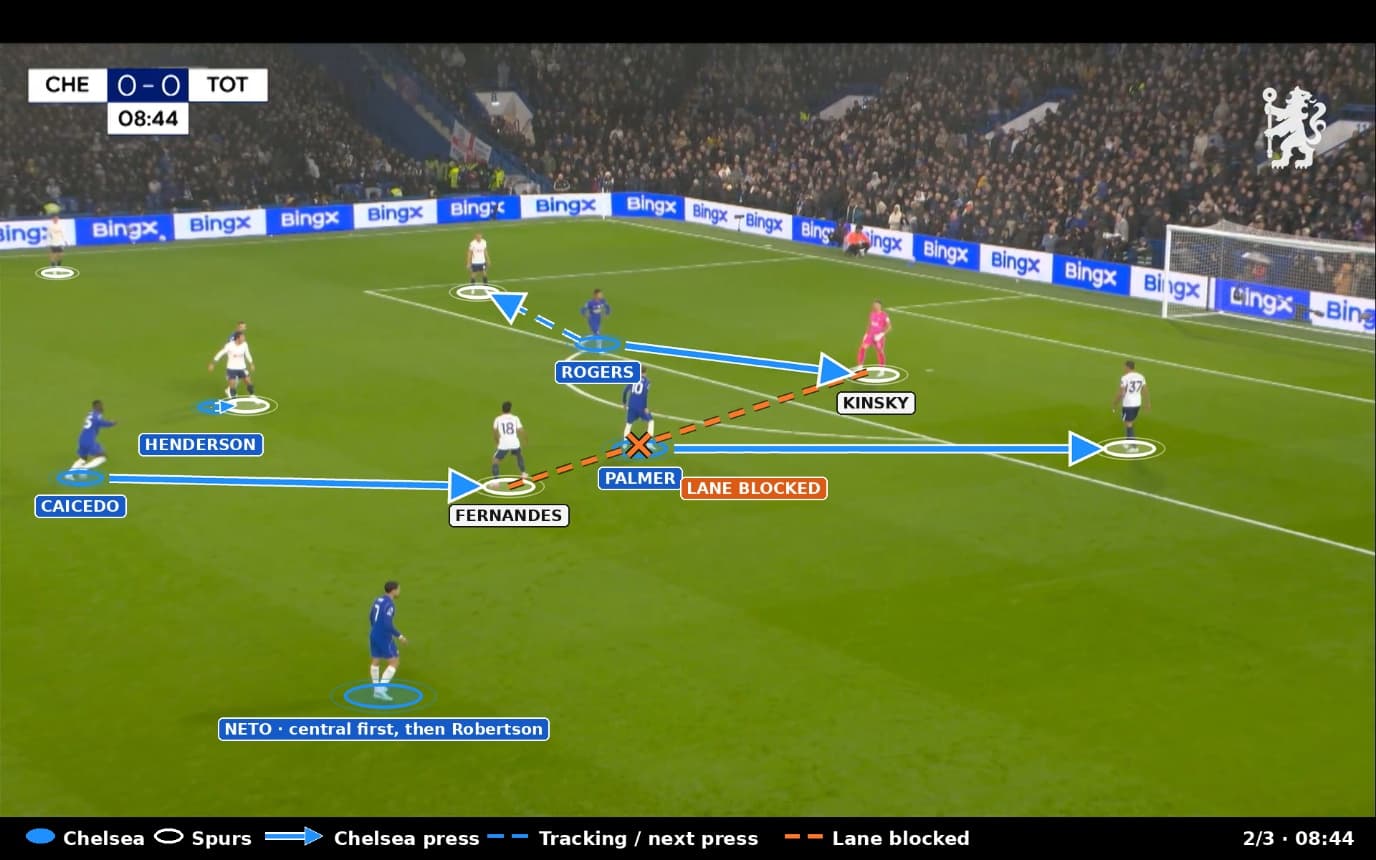
Rogers arcs his run to force Kinsky to the other side or long, while Henderson presses Tonali. That was the idea.
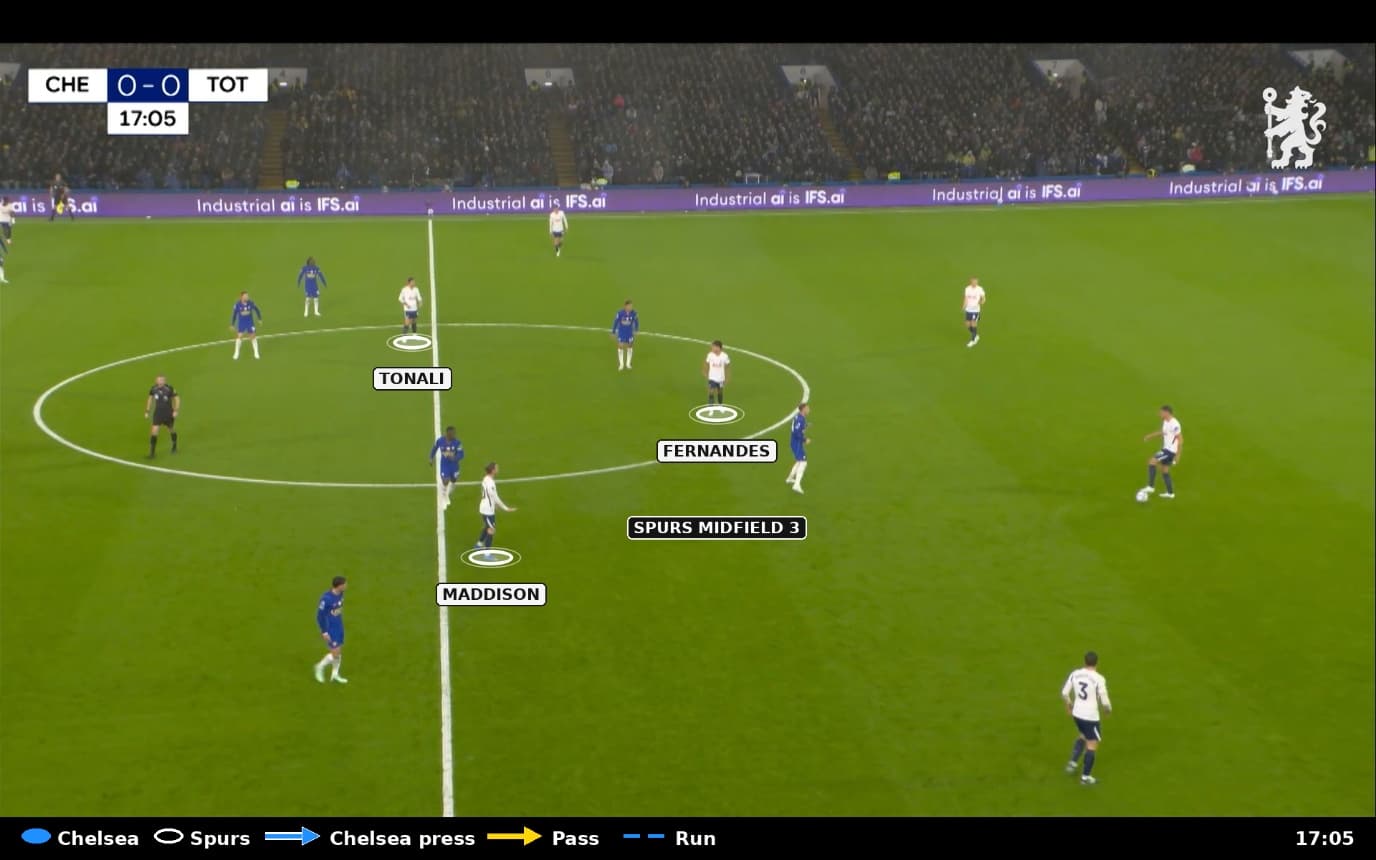
Chelsea’s two midfielders step up to press Spurs’ two midfielders. Caicedo goes to Fernandes, the Spurs player directly in front of him, and Henderson goes to Tonali. But Spurs have a third midfielder in Maddison, who drops into the half-space to receive and turn it into a 3v2 against Chelsea’s midfield.
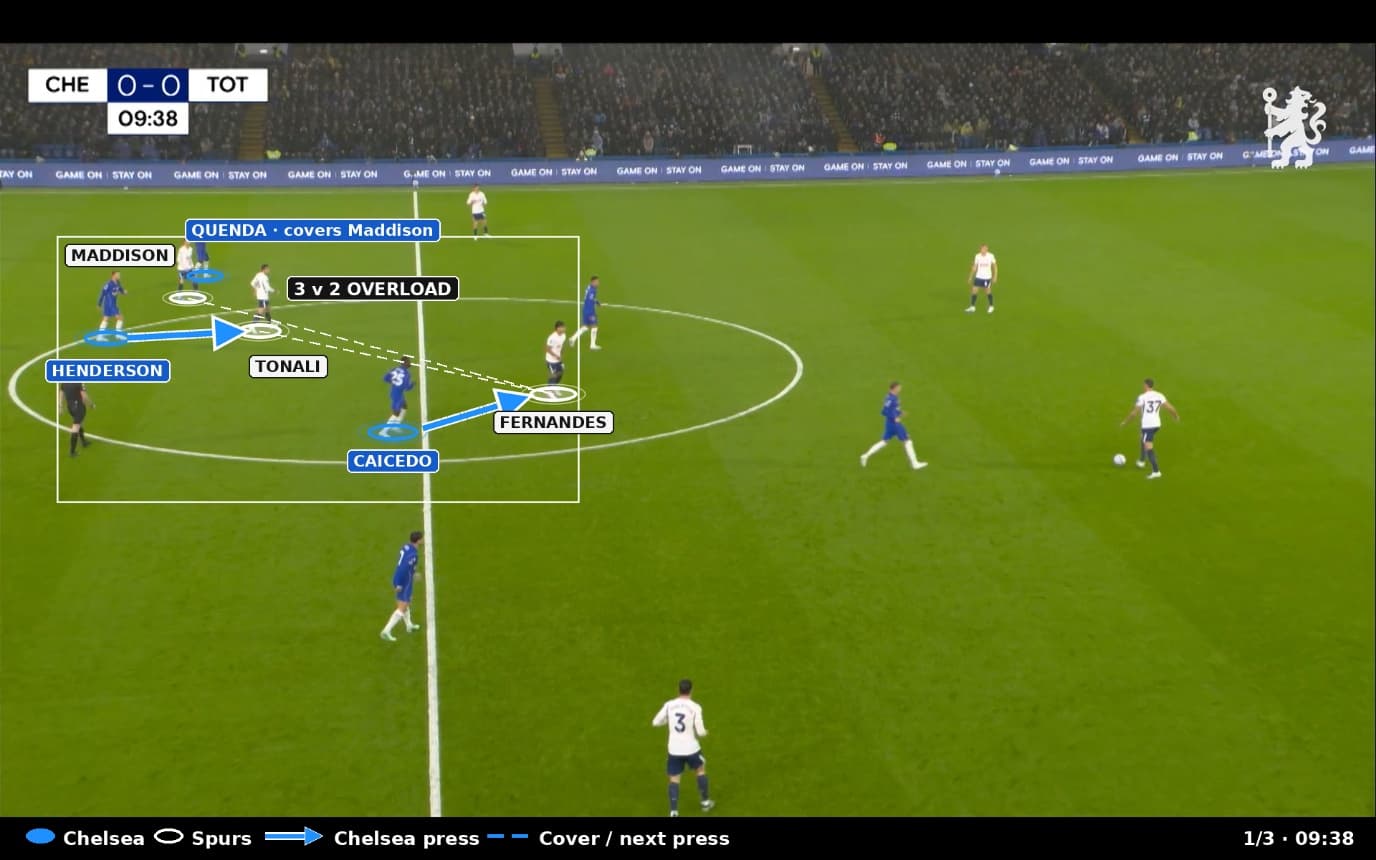
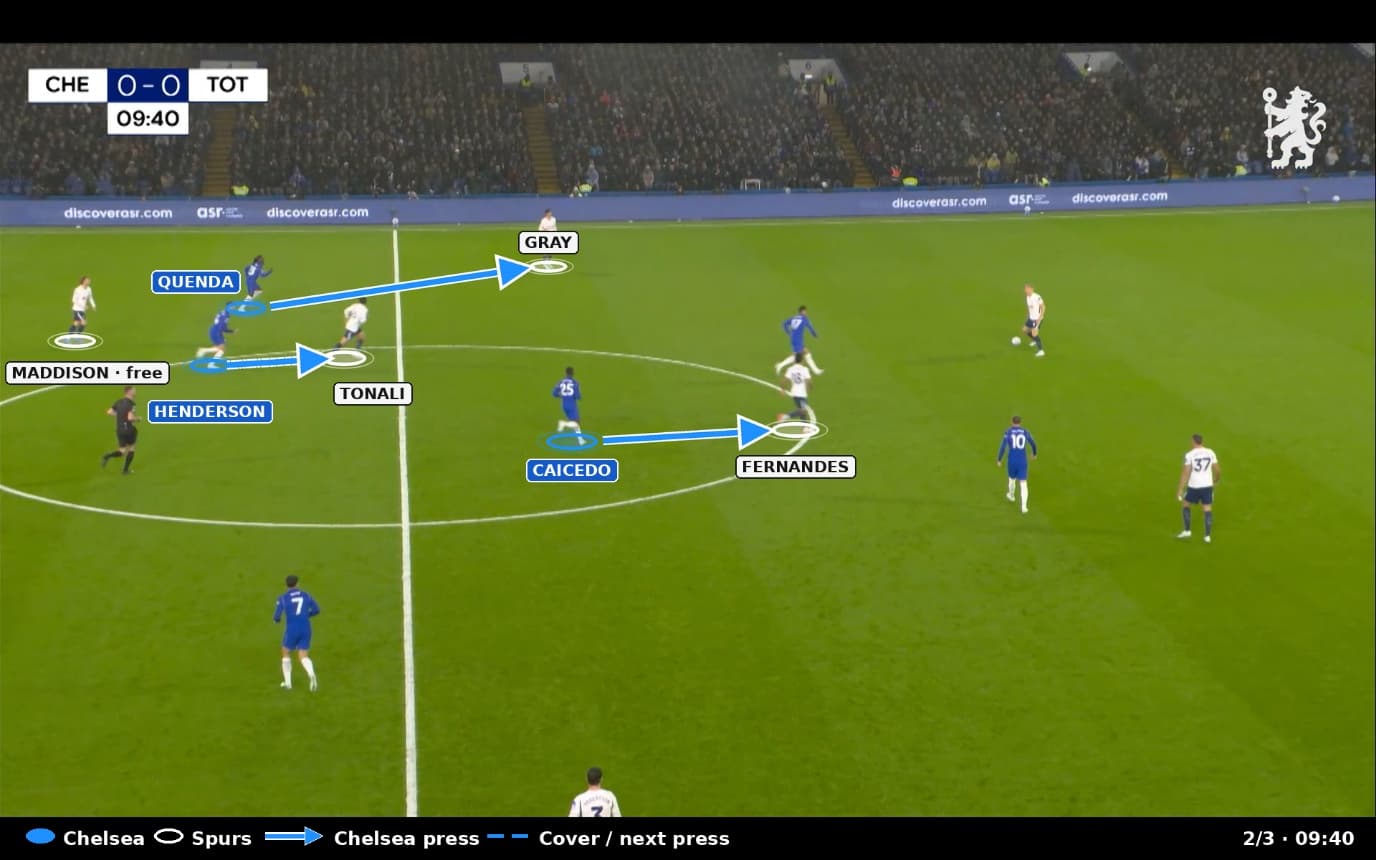
To stop Maddison receiving freely in that right-hand Spurs half-space, Quenda stays in shape next to him and holds that area when Chelsea are in a 4-4-2 midblock, until he presses Grey, the Spurs right back near the touchline, leaving Maddison with more space. Colwill then steps up from his left centre-back position to track Maddison, so he can’t receive the free and turn.
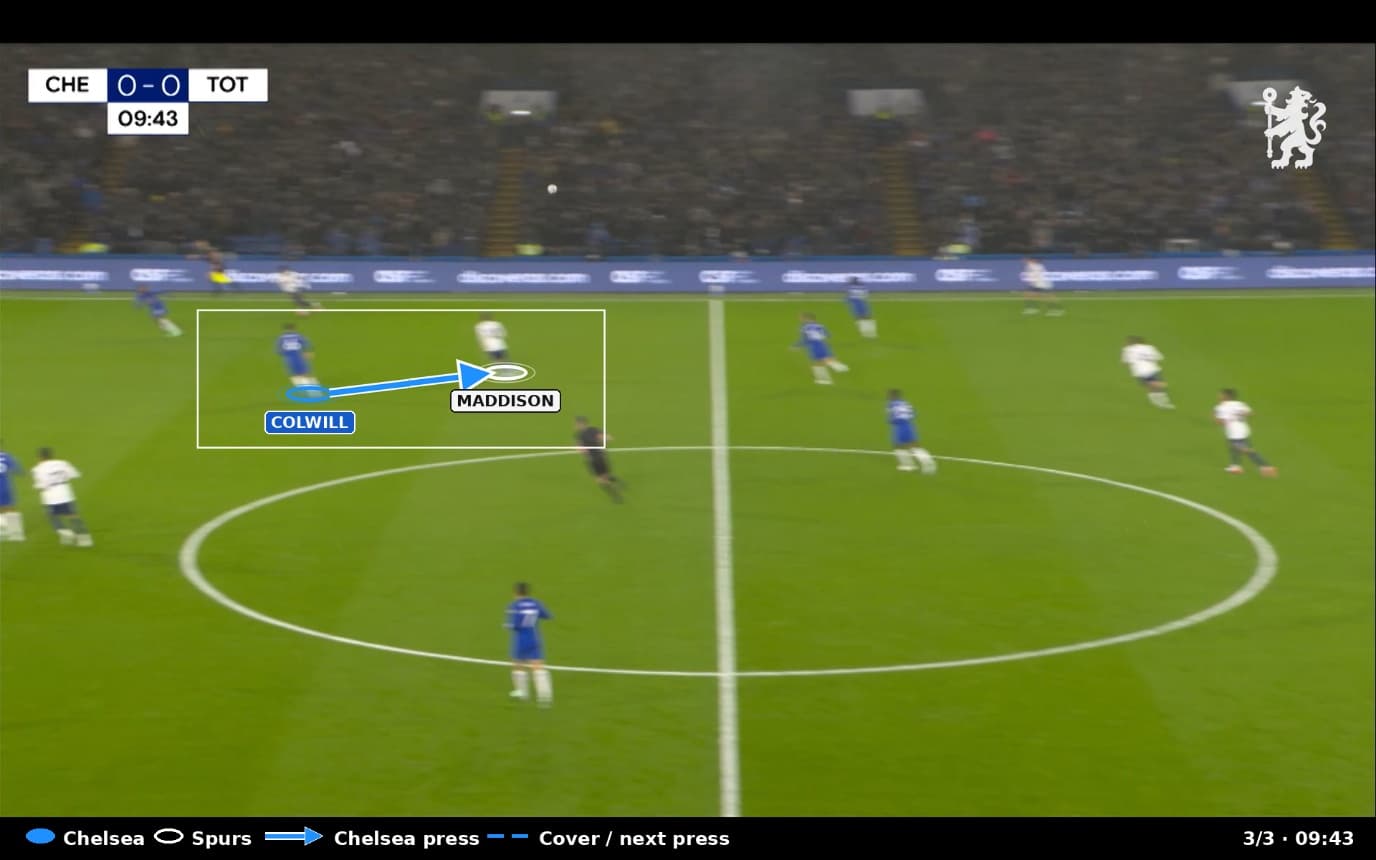
But that was also where Maddison took advantage, by dropping even deeper, into the midfield.
Spurs’ midfield three was set up with Maddison on the left, Tonali on the right and Fernandes as the deepest midfielder. Maddison dropped deep a lot, into the half-space, and in those positions the Chelsea centre-backs could not follow him. That is because Chelsea were in a 4-4-2 mid-block, so stepping out of the back line to follow him would leave a gap behind. Maddison did this to pin Chelsea back, and it gave Spurs a free player in midfield. Chelsea’s two central midfielders could not deal with a three. A solution might have been for Palmer to drop deep and make Chelsea’s midfield a three as well, so there was someone to deal with Maddison. Without that, it really helped Spurs have more control of the game. Spurs used it to free up wide areas too for a switch to Tel and it allowed Fernandes have more space than he should have.
Chelsea were sloppy when they did win the ball at times but Chelsea’s chances also came from the same high press
Here is one.
Chelsea’s press was at its best when it was aggressive and man-to-man. Neto closed down Robertson while Palmer went at Van de Ven on the ball
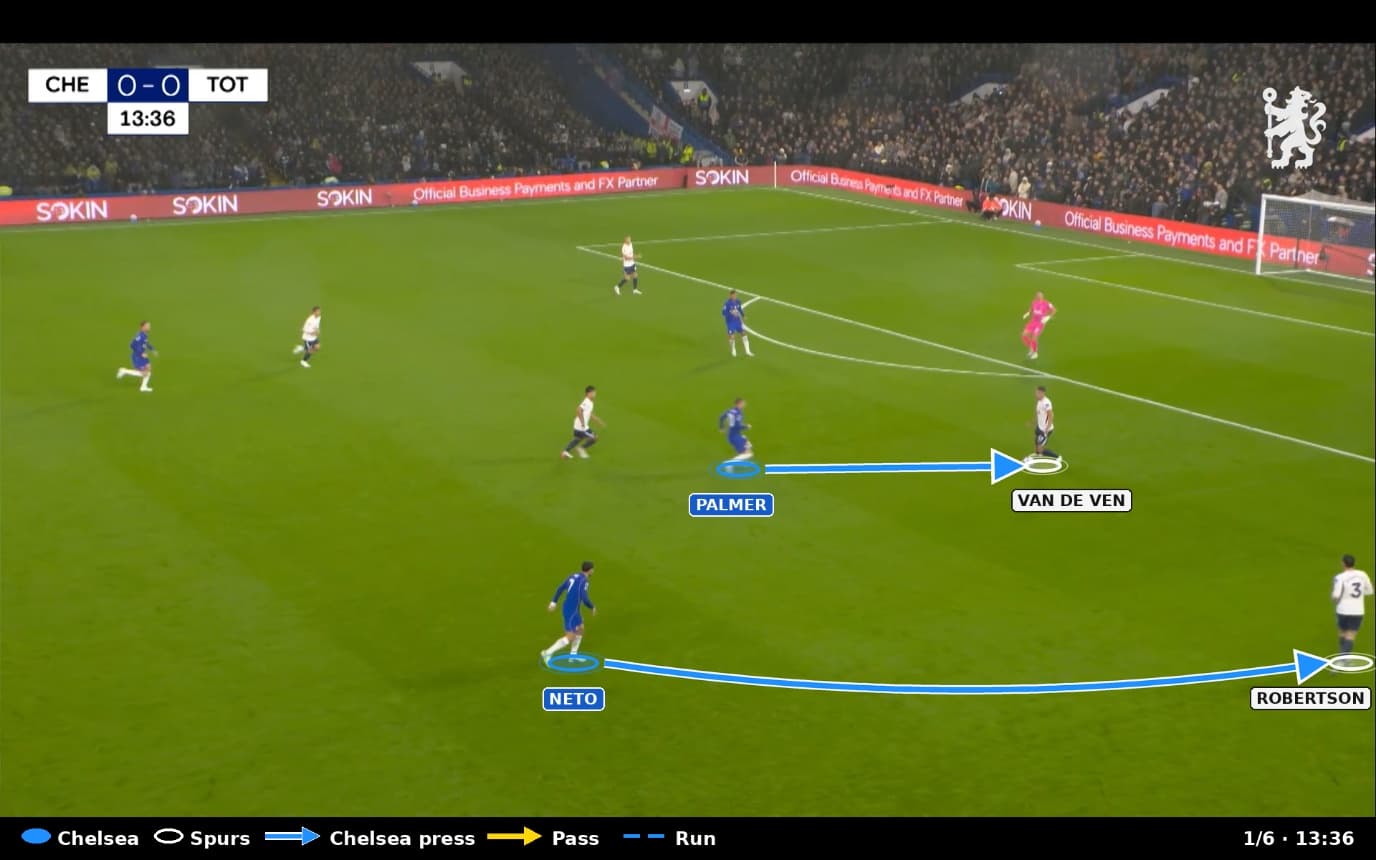
and that pressure forced a loose touch in midfield. Caicedo went straight through Maddison with a sliding tackle and won it cleanly
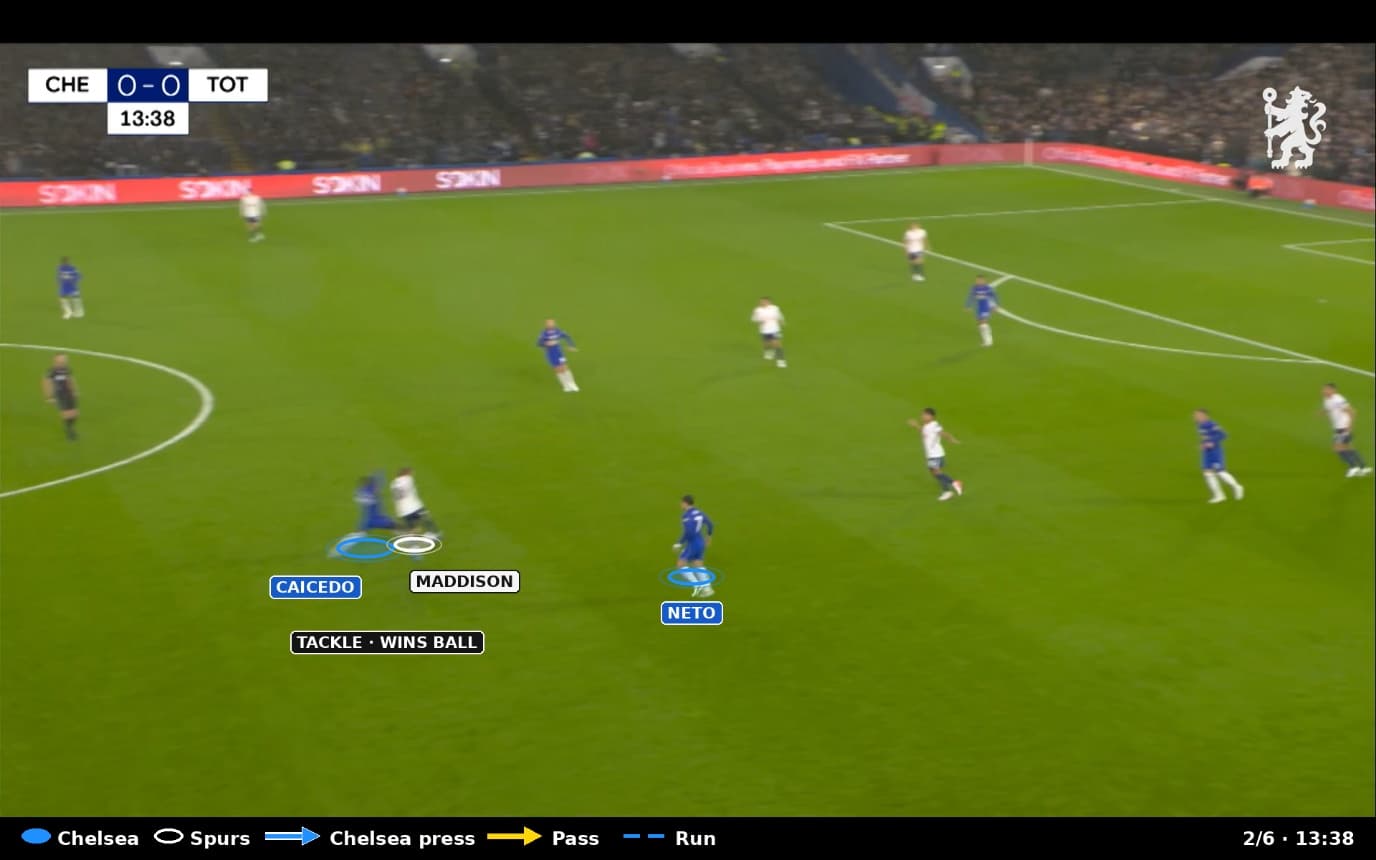
and Neto picked the ball up and drove at a Spurs back line that had been turned around
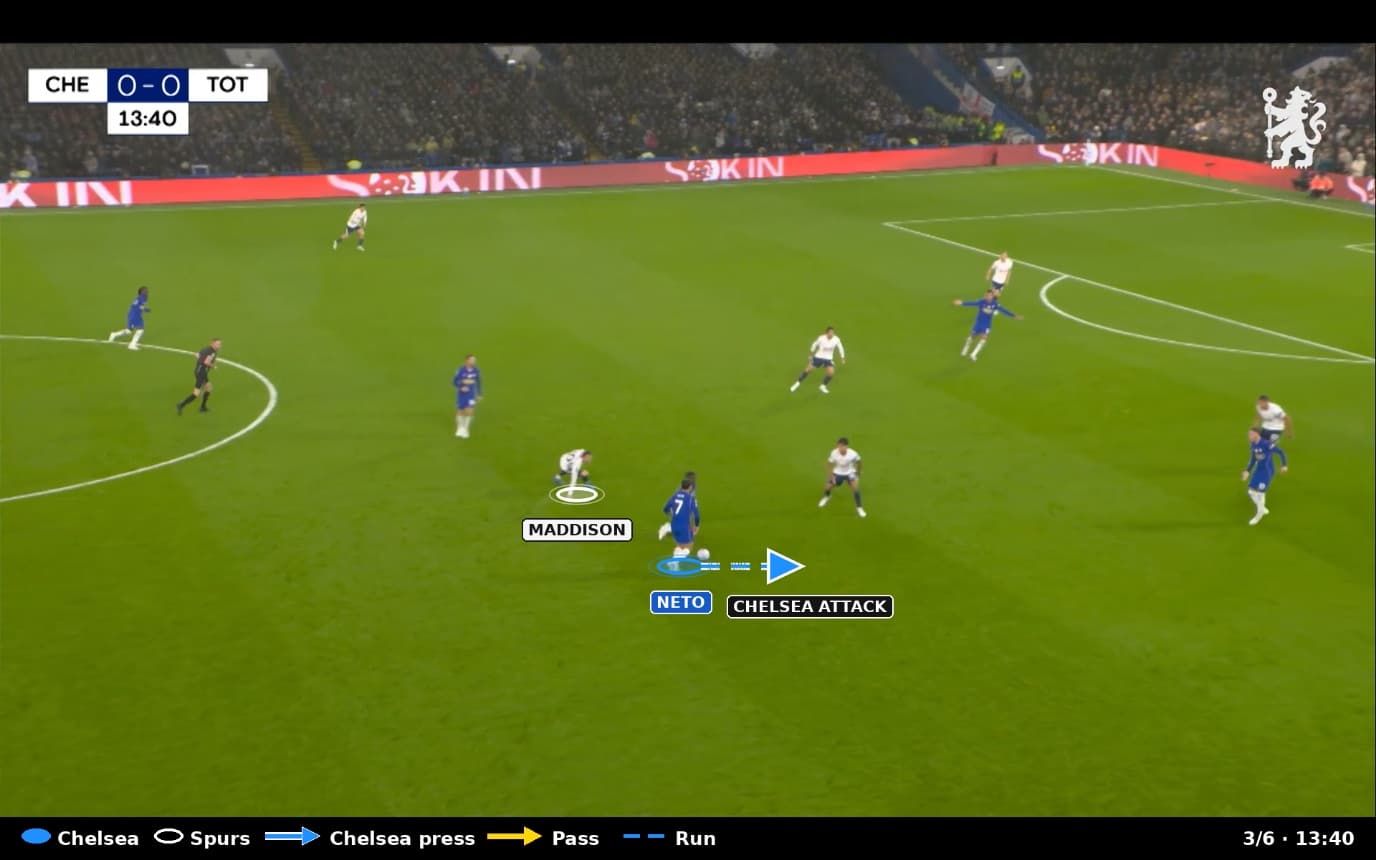
Spurs never recovered their shape. Rogers got the ball on the edge of the box and slipped it to Palmer on his right
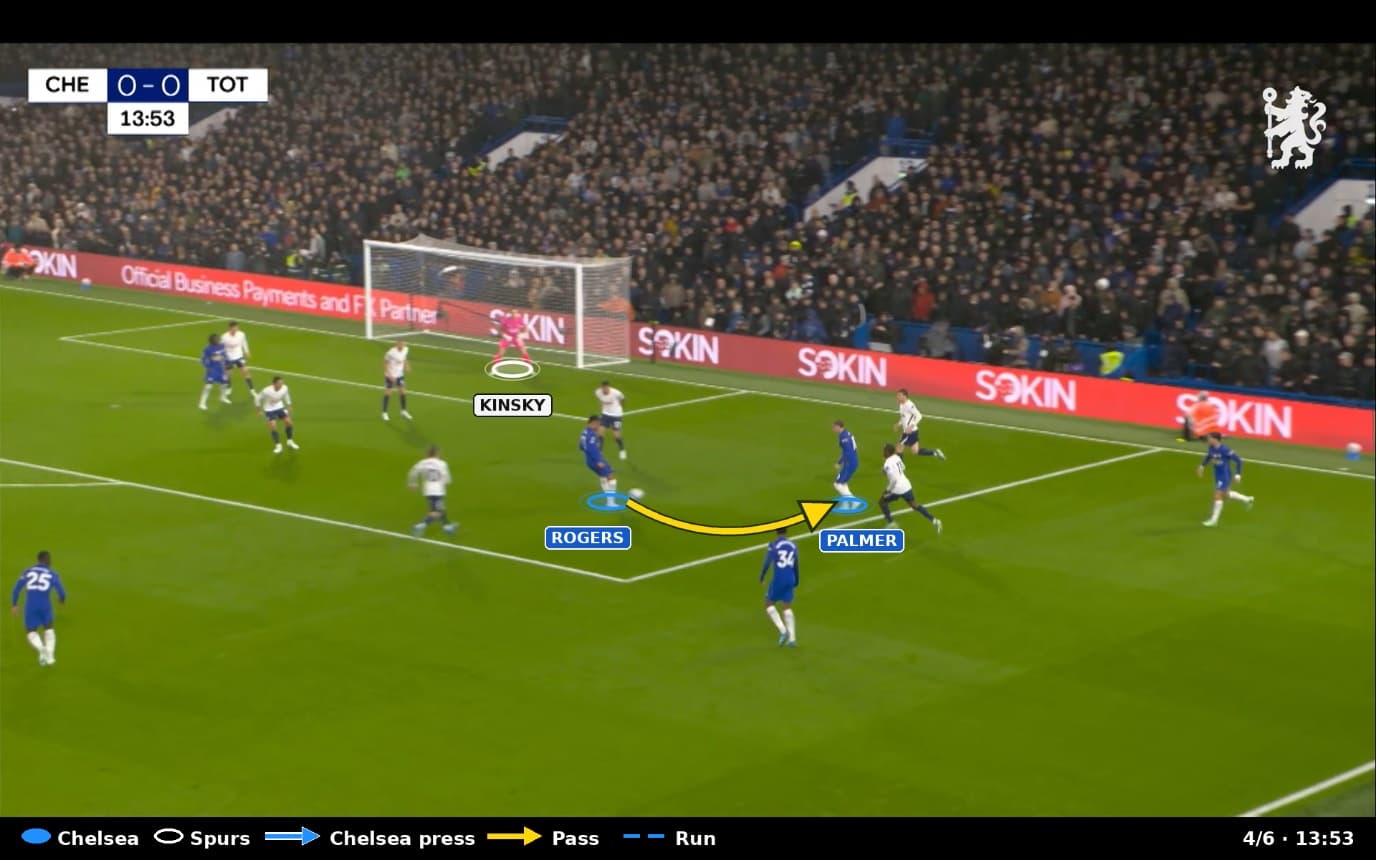
Palmer shot for the top corner on Kinsky’s right and Kinsky got across and saved it
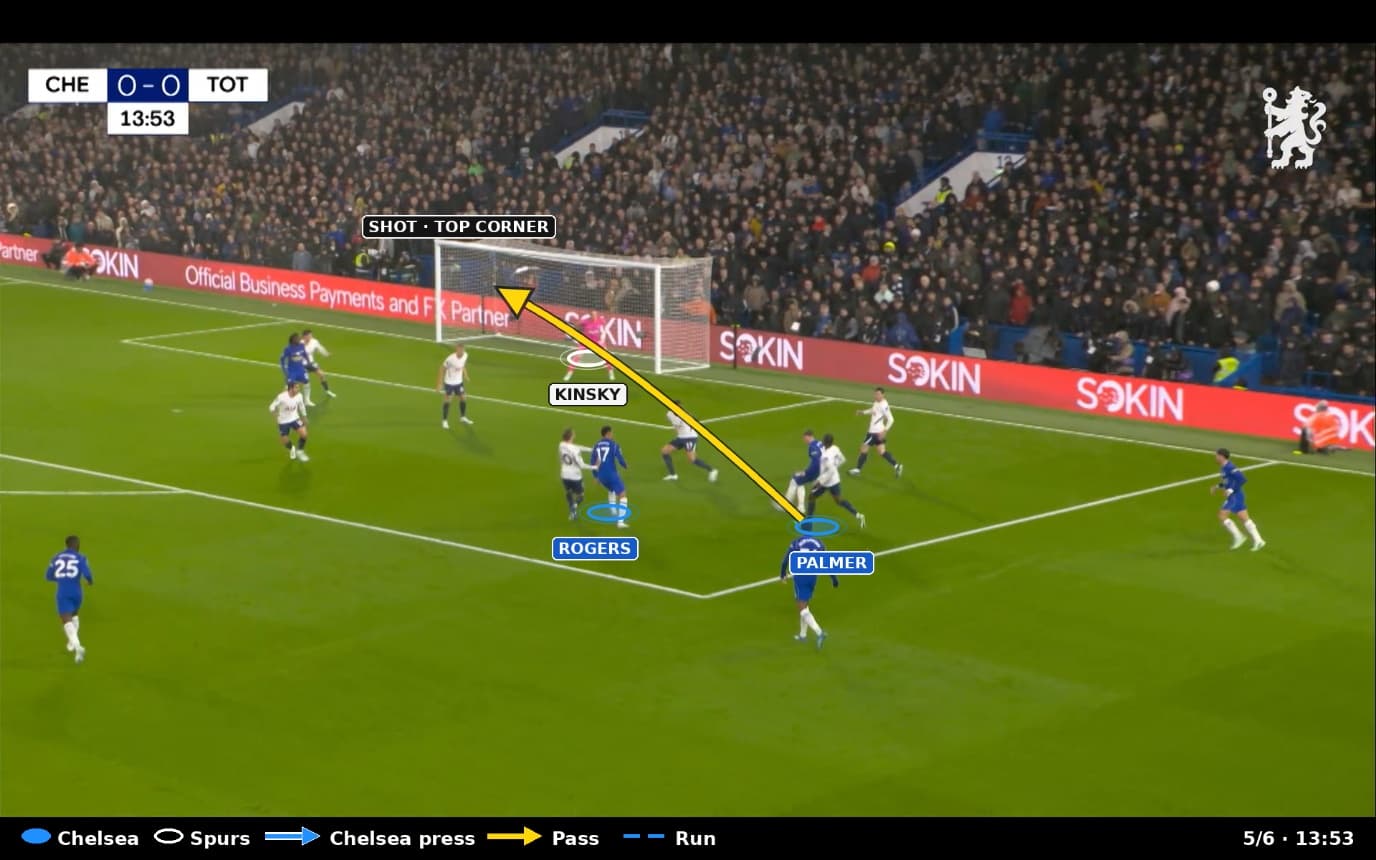
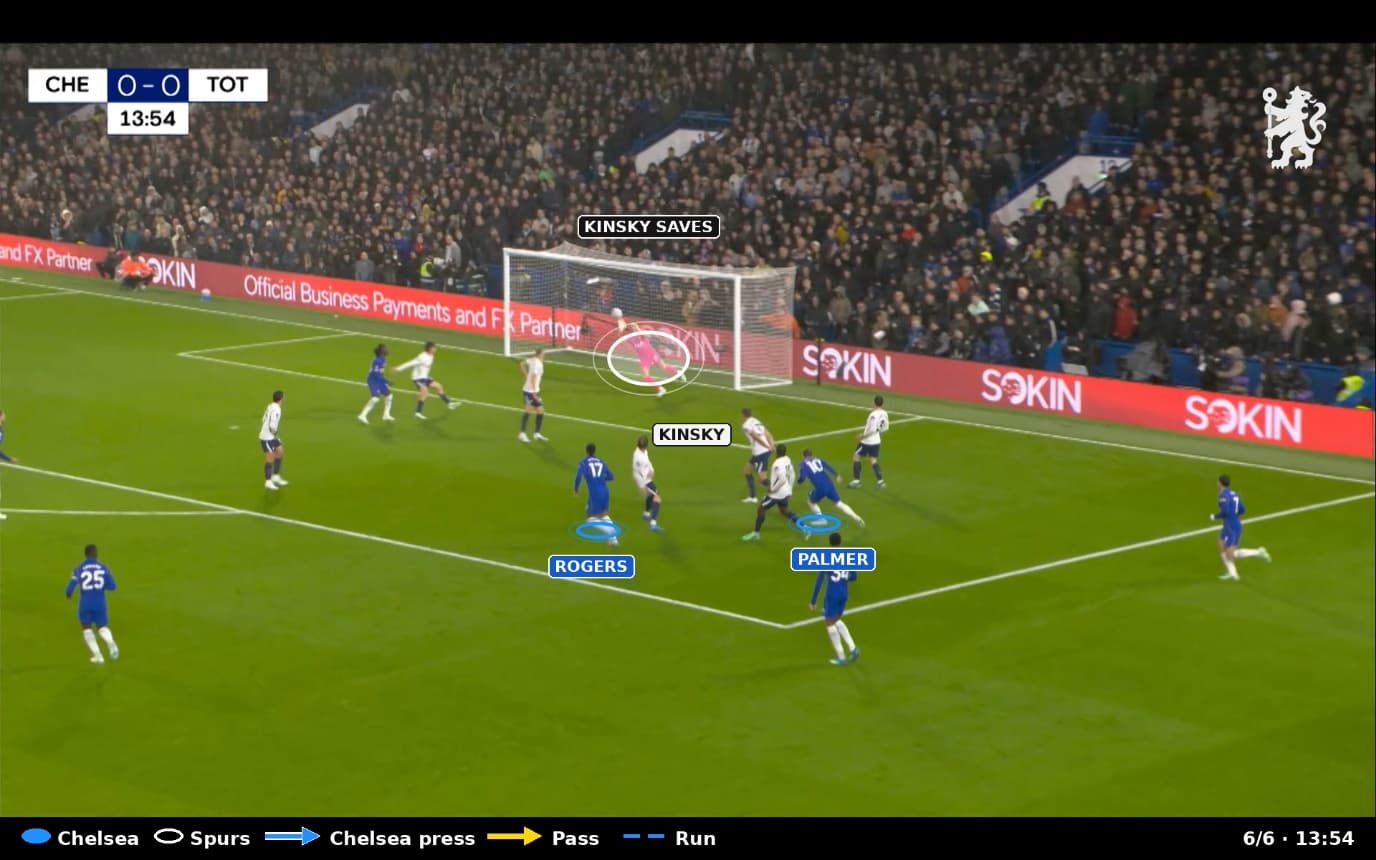
So yes it worked to a good degree. The issue is Chelsea didn’t do it regularly or sustain it, and Spurs pinned them back later in the game, especially in the 2nd half.
No one can step up so far to cover for Joao Pedro in the PL
João Pedro is the one player Chelsea have no real replacement for. He has started most of Chelsea’s Premier League games, and when he starts, they do well. He has only lost once as a starter, against Arsenal. The other games Chelsea lost, including Brentford and this one against Spurs, were games he missed, and in both Chelsea did not look good and did not score. That shows how big a piece of the attacking puzzle he is.
It also explains why going direct has worked for Chelsea this season. João Pedro and Morgan Rogers are the reason, because ideally you want both of them up there to compete for aerial duels and win the second balls from them. In this game, Rogers and Palmer started up top, so there was no extra forward to do that. With only one of them available and Chelsea still going direct, it was a recipe for giving Spurs the ball back so they could dominate.
Welbeck started against Brentford, but it was an okay performance and he did not really do much to replace João Pedro. Xabi Alonso could also have started him against Spurs to give Palmer and Rogers a centre forward to bounce off. Maybe he should have, but with Welbeck, Chelsea will not carry a pressing threat, because he cannot sustain it at his age. Emegha is also not available, as he is still coming back from injury, and Jackson, who would have been ideal, is not here for many reasons. So Xabi Alonso has to work out how Chelsea replace or deputise for João Pedro, because right now no one can step up for him.