How does Rosenior want his team to play- Deep dive into Strasbourg’s tactics
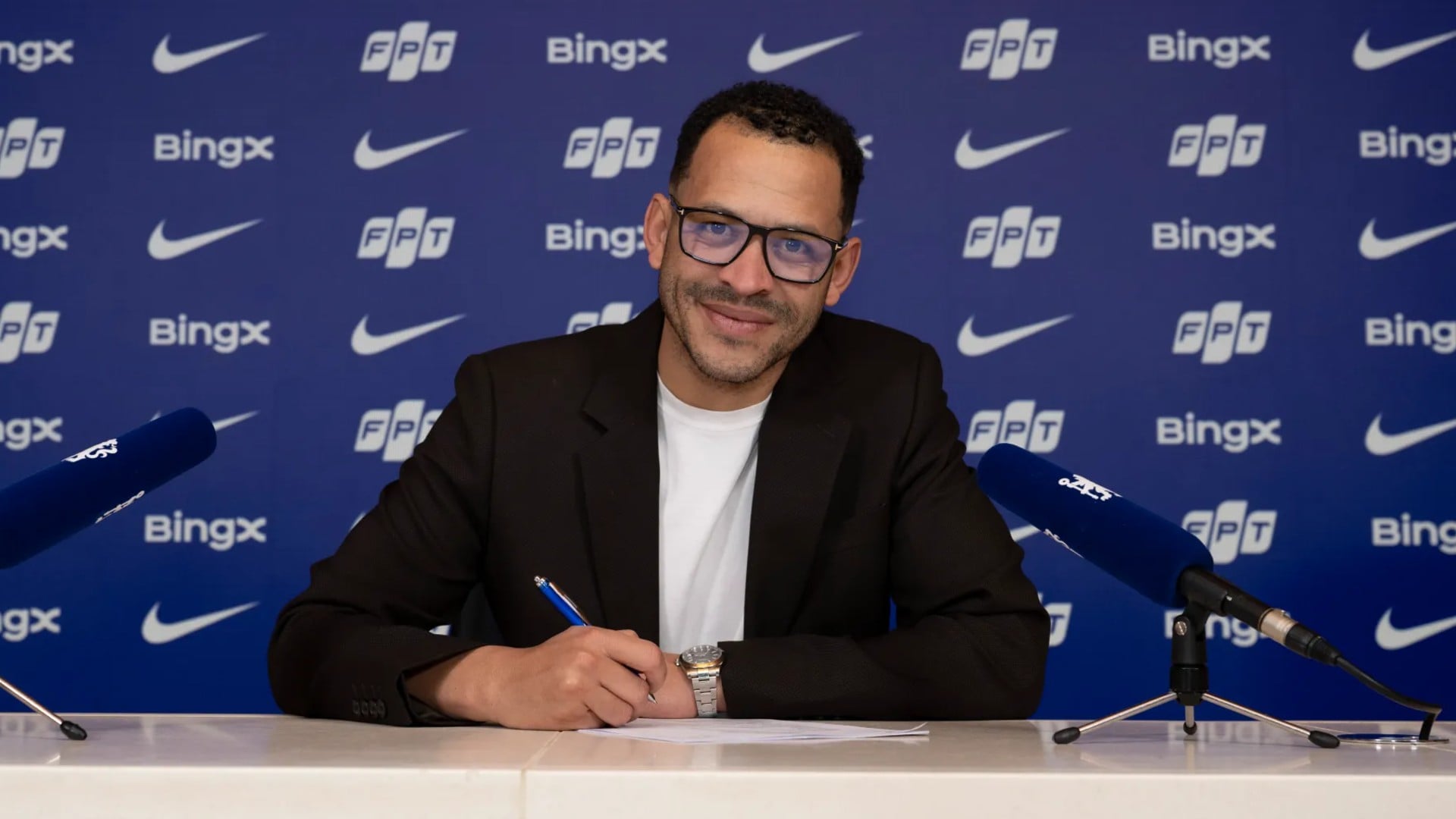
Chelsea is in the process of getting a new head coach after the departure of Enzo Maresca, and the leading candidate and most likely head coach in the process of being installed at Stamford Bridge at the time of writing, from multiple reputable sources, is Liam Rosenior. Liam is currently at Strasbourg (Chelsea’s sister club in the Multi-Club Model).
Liam started his coaching career at Derby County, initially filling in as the interim Manager after the sacking of Wayne Rooney. He quickly impressed by winning 7 in 12 games and caught attention to how he can stabilise and structure teams quickly. He was then appointed at Hull City as the Head coach, taking over a side that was hanging just over the relegation zone. He guided the Tigers to a 15th-place finish just one point above the relegation zone in the 2022-2023 Championship season. After having a full preseason with the squad, he established a promotion run but fell short by narrowly missing out on the playoffs by three points on the final day of the following 2023-24 season. Even though Rosenior turned Hull’s fortunes around and got a Manager of the Year nomination, he was dismissed on 7th May 2024 after failing to make the playoffs, and the club ownership preferred a different “style of play”, which was more of a strategic misalignment with the board. Hull didn’t reach the Premier League at this time of writing. Rosenior once again came into a struggling Hull City side and rescued them from relegation by making them more solid with a possession-based based pragmatic style of play.
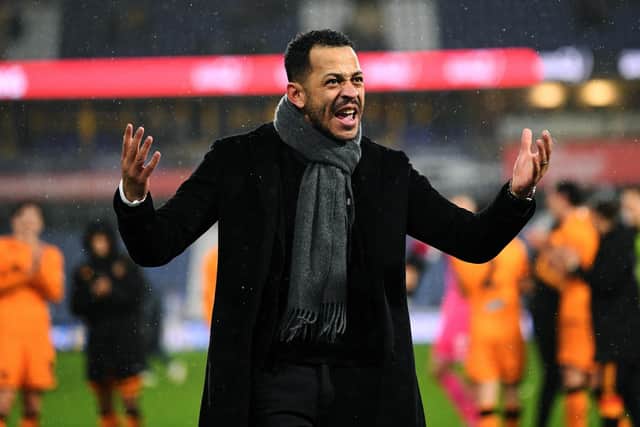
This piece, however, will focus on Rosenior’s tactics at Strasbourg, where he really again upgraded his status as one of the most intriguing upcoming young coaches in the game.

Liam’s philosophy is all about controlling the game with possession and being aggressive off it simply put. He loves his teams to build up with short passes and invites teams unto them and look to quickly hit the spaces and exploit them. Off the ball, his team aims to press high against teams and look to wing the ball back and also exploit the space left, his team aims to create space and attack the space quickly. So lets dive in
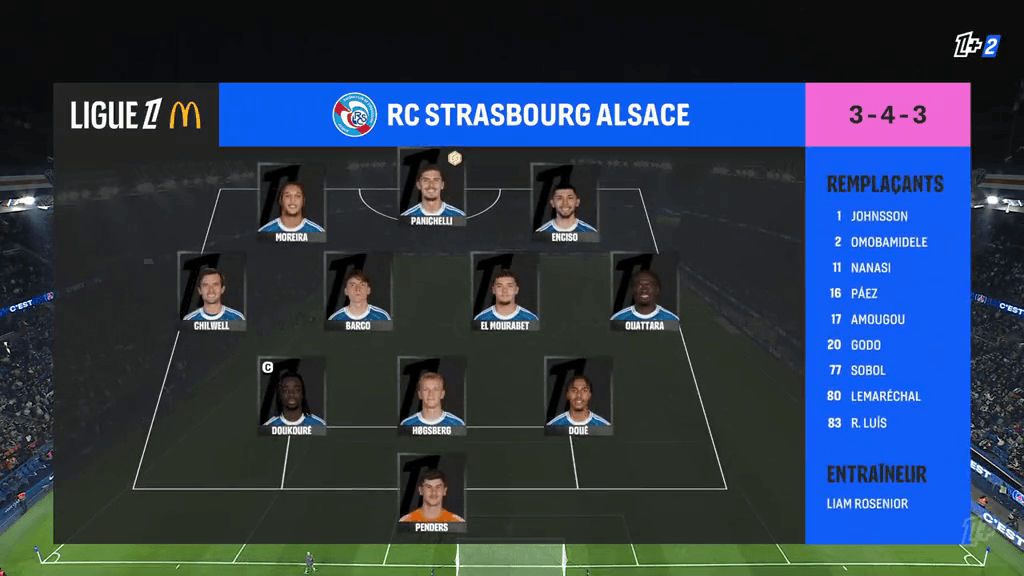
LINE UPS
Now like you will realise quickly after watching Rosenior’s Strasbourg side, which tunes into football nowadays, you will see that starting formations on paper aren’t what you will see in the game as his side has their shape on and off the ball. He uses a variety of different formations from the 3-2-4-1, 3-5-2, 4-2-3-1 to the 4-3-3. On the ball, though, his teams are consistently looking to form a 3-2-5 shape, which is fairly common in modern football, where either the Fullback from either side goes wide and a winger moves into the Half-space as a 10 or the fullback does it. Off the ball his team falls into 5-3-2/5-4-1 Mid to low block when they are defending in their half and use a Man to Man aggressive press when trying to win the ball in the opposition half.
BUILD UP / ATTACKING STRUCTURE
Now Rosenior’s build-up schemes have become quite popular on the internet as it involves his Goal Keeper to be heavily involved in the build-up play by bringing them out of their line and making them like an out-field player. Mike Penders has been the one executing those instructions this season as he comes our of his line to become a +1 in possession (an extra man). Its not a new concept by any means but the way Penders does it, its more extreme than most teams as he is way off his line assisting with the build up when Strasbourg are in settled possession. Before it gets to that, from the Goal Kick, the team forms a 4-2-4 shape with Penders still on his line, with the 2 players in the double pivot dropping deep to receive the ball from the GK and centre backs with short passes into the pivots.
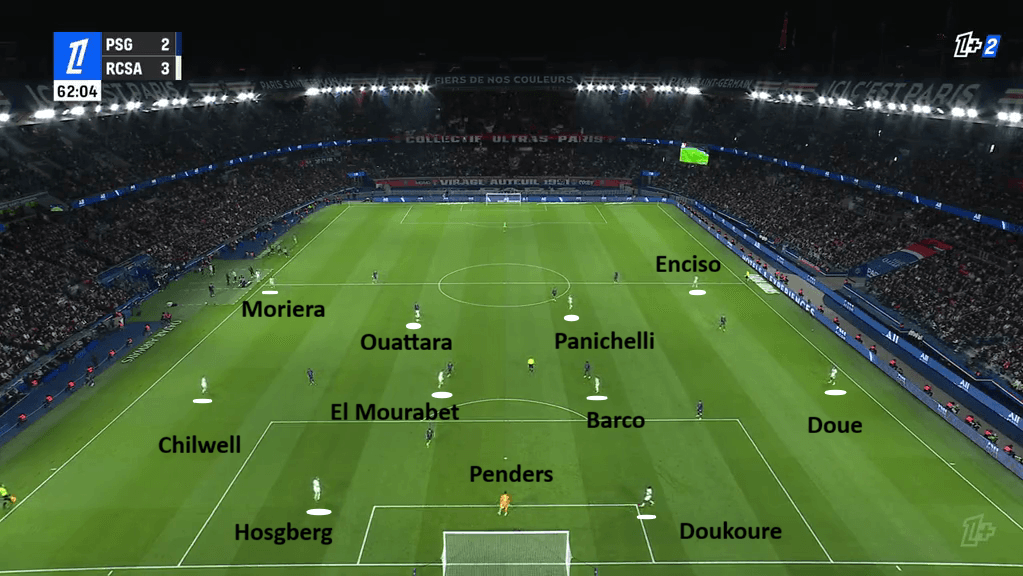
The pivots try to look for diagonal passes to the CBs to then find one of the 10s who can receive on the half turn but if not, they look for the free man and recycle the ball until they can progress with it.
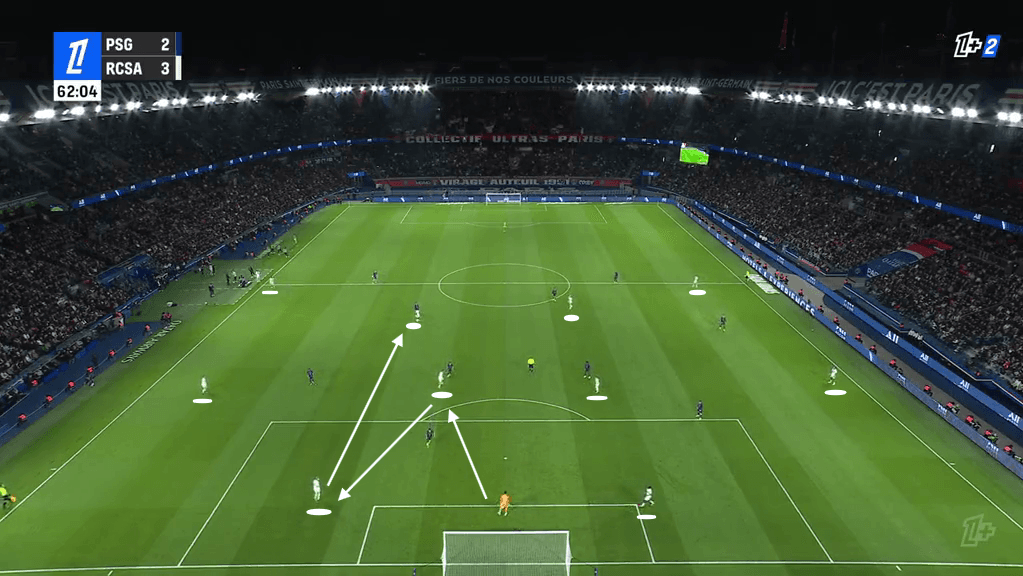
So this back 4 can be formed with different type of players as Liam is flexible in his line-up selection and tries to do it game by game depending on the opponent he faces, but lets say he likes a Winger that can play as a wing-back as well (Diego Moriera). We will get back to that. It also means anyone can land in any zone in the build-up. Enciso, for example, is an inside forward and he's wide in the initial build-up. Ouattara is a midfielder who plays multiple positions for Rosenior, mainly a right winger who can play inside the block as well as outside it. So players will play in odd zones at times with Rosenior, sounds familiar right?
The wingers also provide themselves as options to receive the ball by coming in from the wings to receive on the half turn, I must say that the build-up sequences are impressive and will translate well to quality players. It doesn’t still take away the risky part as it still is
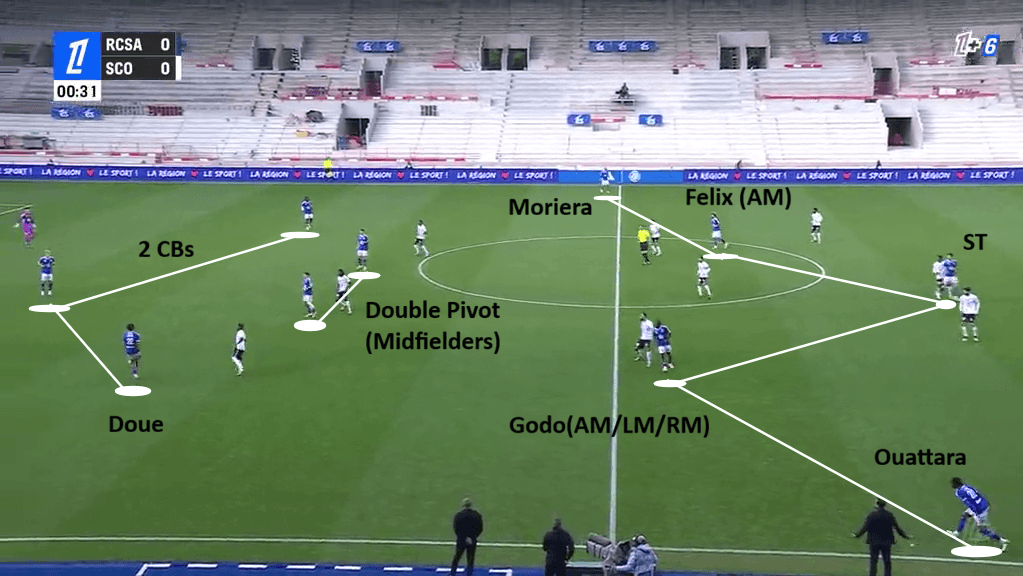
Now in a settled build-up up when the ball is firmly in possession of Strasbourg, they use a 3-2-5 shape as I mentioned with usually a Fullback in the back 3 and the other fullback/wingback high up in the attack. Lets use this as an example.
2 CBs are playing even if it’s a 3 at the back formation its on paper as, Doue the RB is playing as the 3rd CB in possession, Moriera the LB is saying wide as a LW in possession, Felix the 10 is in the Left Half space (LHS) a double pivot of deep lying midfielders Barco and El Mourabet, Godo a winger/attacking midfielder playing in the RHS, Outtara a winger who would drop back as a Right Wing back is playing as the RW in possession and Panichelli as a the ST, it can be confusing but he knows what he wants.
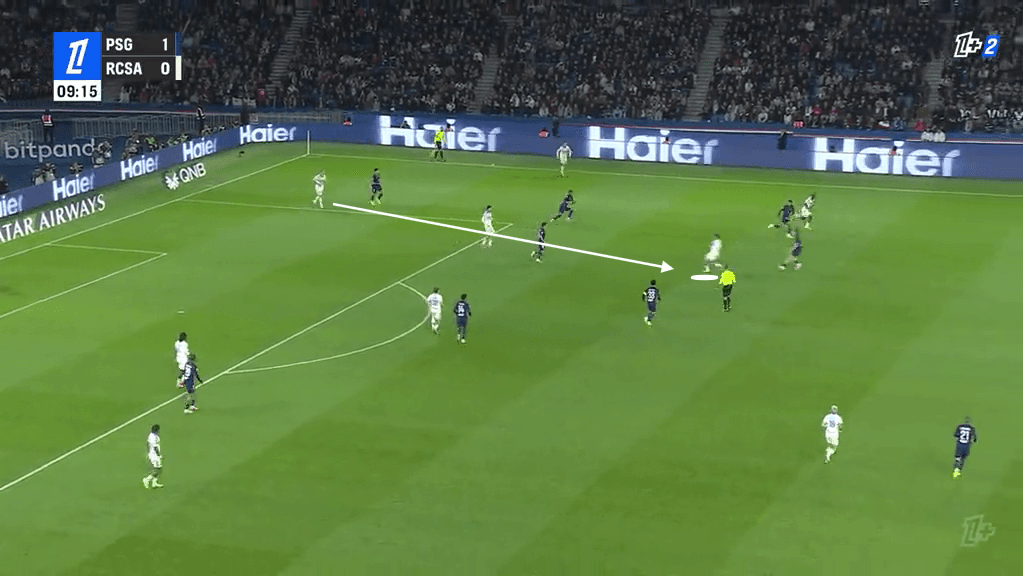
When the ball is recycled to the Penders (GK), he looks to open up a passing lane and become a Centre back when they have the ball. You can see it in the above, but let me highlight it for you here. Penders, as the make-shift Left CB here, creates the plus 1 in possession and invites the opposition to press and then his team can find the spaces to short pass their way out of pressure. If the opposition does a very aggressive M2M press, Penders can at times go long to the ST to win the 2nd balls and attack, or to the wingers, at times direct passes to the 10s, but mainly it's short passes.
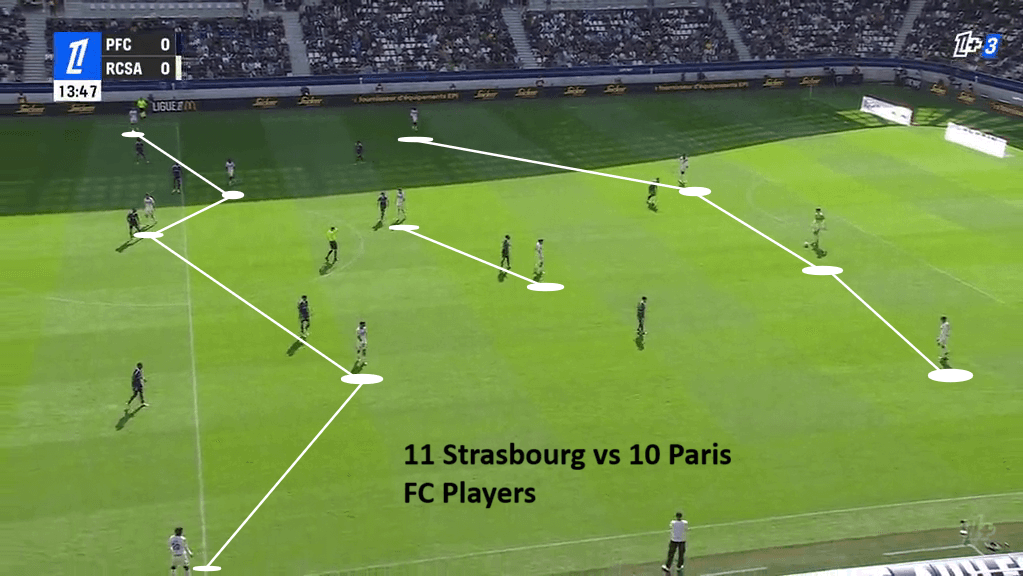
It’s a risky game as it normally is with playing out of the back. Maresca did this with Sanchez, who was mostly not this high up regularly, but with the same aim, so it won't be new to the Chelsea players. If this isn’t executed well or players lose the ball, it can result into opposition players trying to chip Penders from distance or lead to mistakes as Strasbourg has experienced this season. But it can translate to better technical players who can keep the ball but with youngsters, you still have loss of concentration regularly.
Now, when Strasbourg attacks, they use a lot of the double pivot to drop deep and initiate play, Barco did this really well for them and at times becomes a half back , usually the double pivot done stay on the same horizontal line so they can find each other with more angles passes, harder to press them, and they aim to find the 10s if they can or the wingers who can go 1v1.
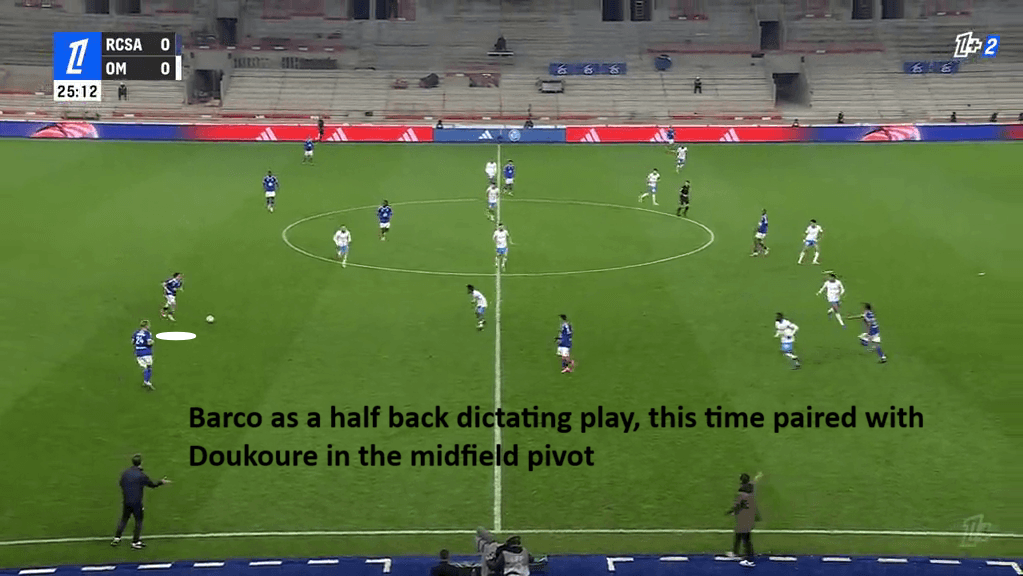
The wingers can either find the 10s who make runs into the channels to create space or link up with them with 1-2 passes. At times one of the pivot players also join in to create wide triangles that they can rotate to pull the opposition apart as they attempt to create space and attack quickly (Remember?).
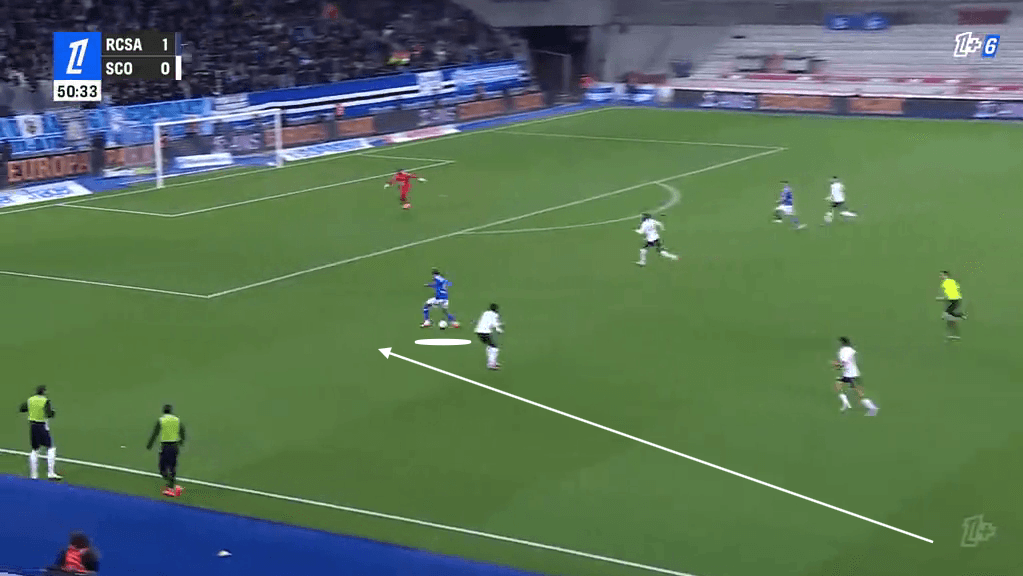
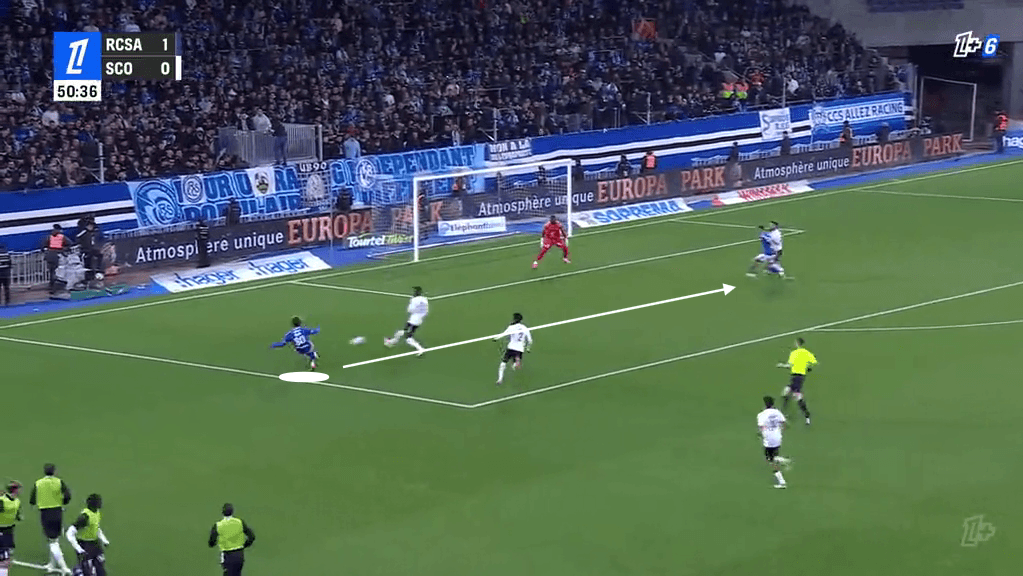
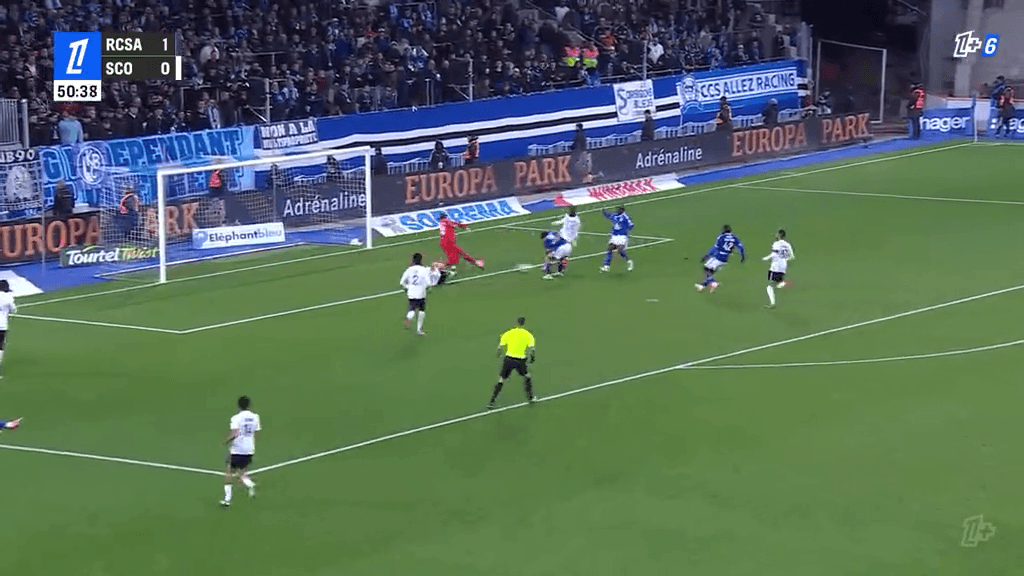
This ball comes from Diego Moriera, a winger to Felix who is making an underlapping run beyond his midfielders, and puts a wonderful cutback, which is common from the wingers, crosses and cutbacks into the box for those in it to attack. Panichelli scored from this chance. Rosenior encouraged his team to put in early crosses into the box, it doesn’t make teams be able to reset themselves when they want to defend it, which is prime for a box striker like Panichelli who thrives on those crosses and has benefitted massively from them.
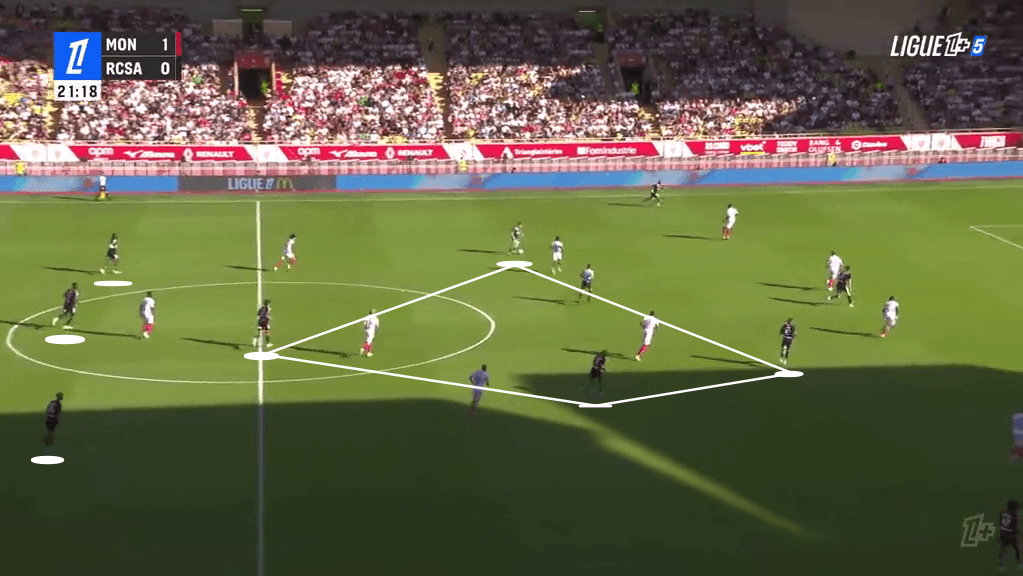
Apart from the 3-2 structure, it depends on the teams that Strasbourg face, Strasbourg also use the 3-1-6 diamond structure with 3 pocket players and 1 pivot player as we've seen against the deeper blocks and teams that play with 5 at the back.
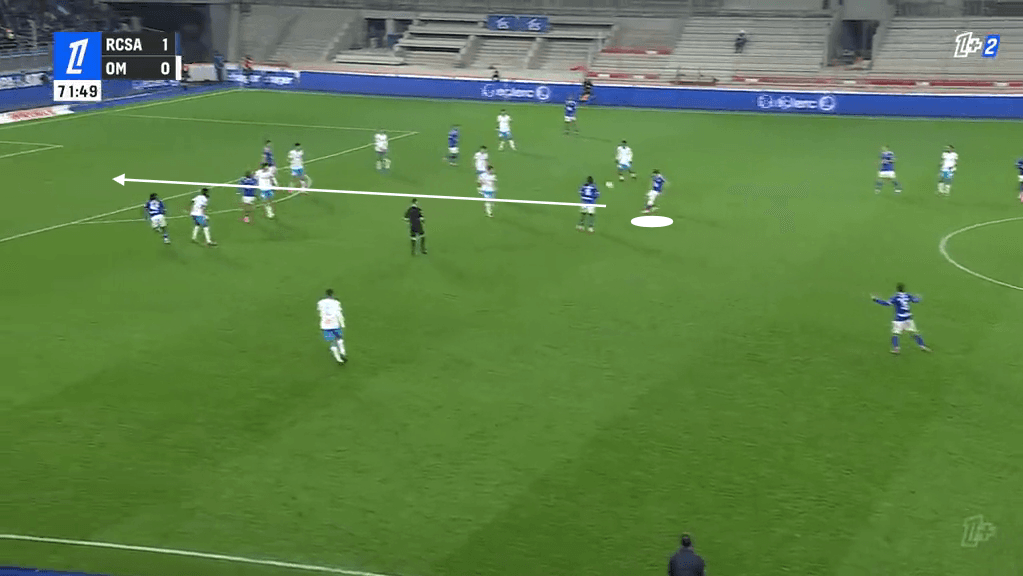
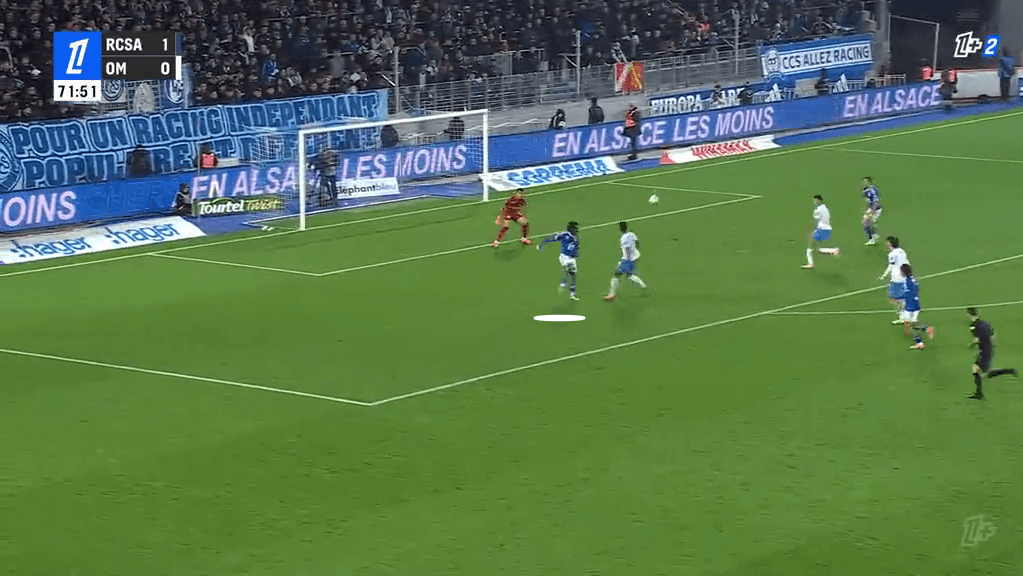
Strasbourg under Rosenior love a good through ball, apart from generating chances though ball wins in the final third, they generate lots of chances through well, through-balls, and Valentin Barco is at the heart of it. Even though they are now joint 6th for through balls in Ligue 1, which they are just 3 from being 4th it shows how much they use that.
These runs are only made by the 10s as well, the forward players are encouraged to make runs in behind and a deep lying passer like Barco has enjoyed feeding them, something Enzo can do from deep as well, will be interesting to see where he plays him.
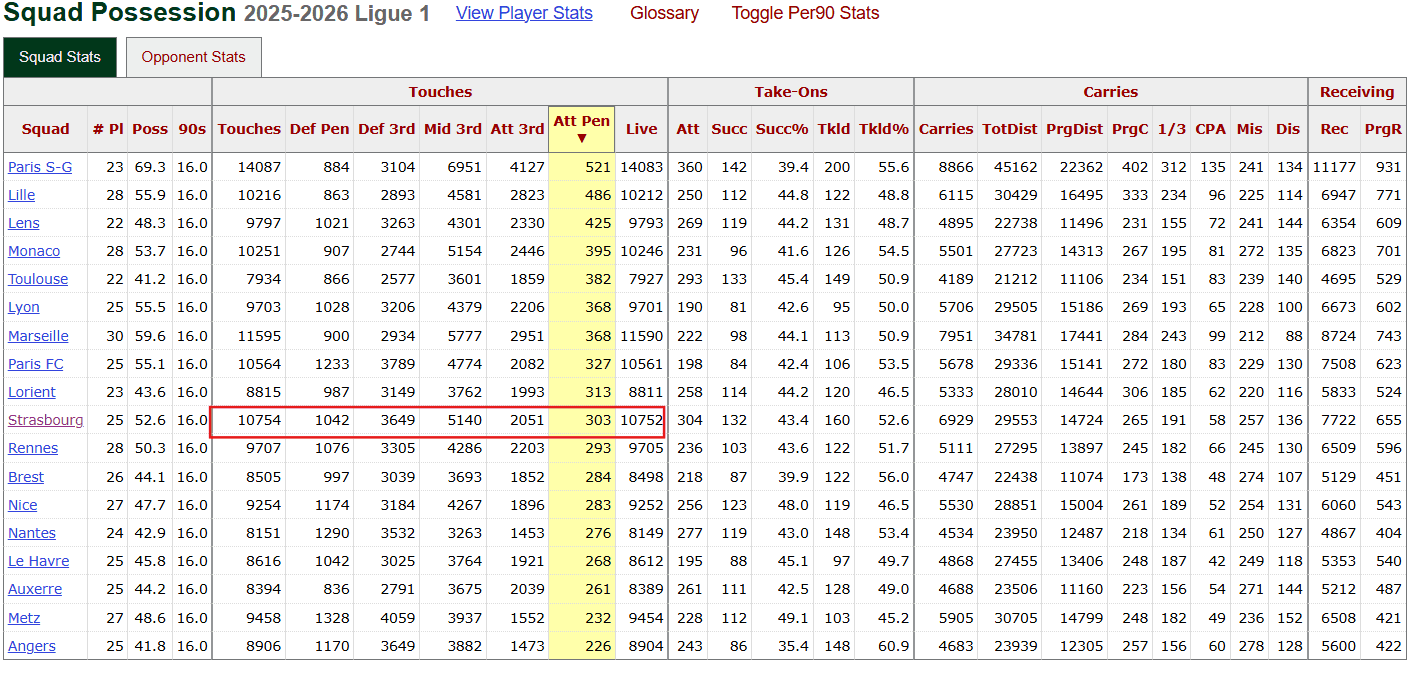
Strasbourg aren’t really the most dominating of attacking sides. According to the stats, they are top 4 teams in the league for touches in their defensive third which emphasizes their willingness to dominate the ball and keep it, they also take the 4th most touches in their middle third but are 8th in the league when it comes to touches in their attacking third, meaning they don’t keep the ball consistently in the opponents final third as much as the other 7 teams and prefer to be more efficient in getting there. They are also 10th for touches in the opposition box which will be interesting as those stats suggest there might be difficulty in breaking down low blocks.
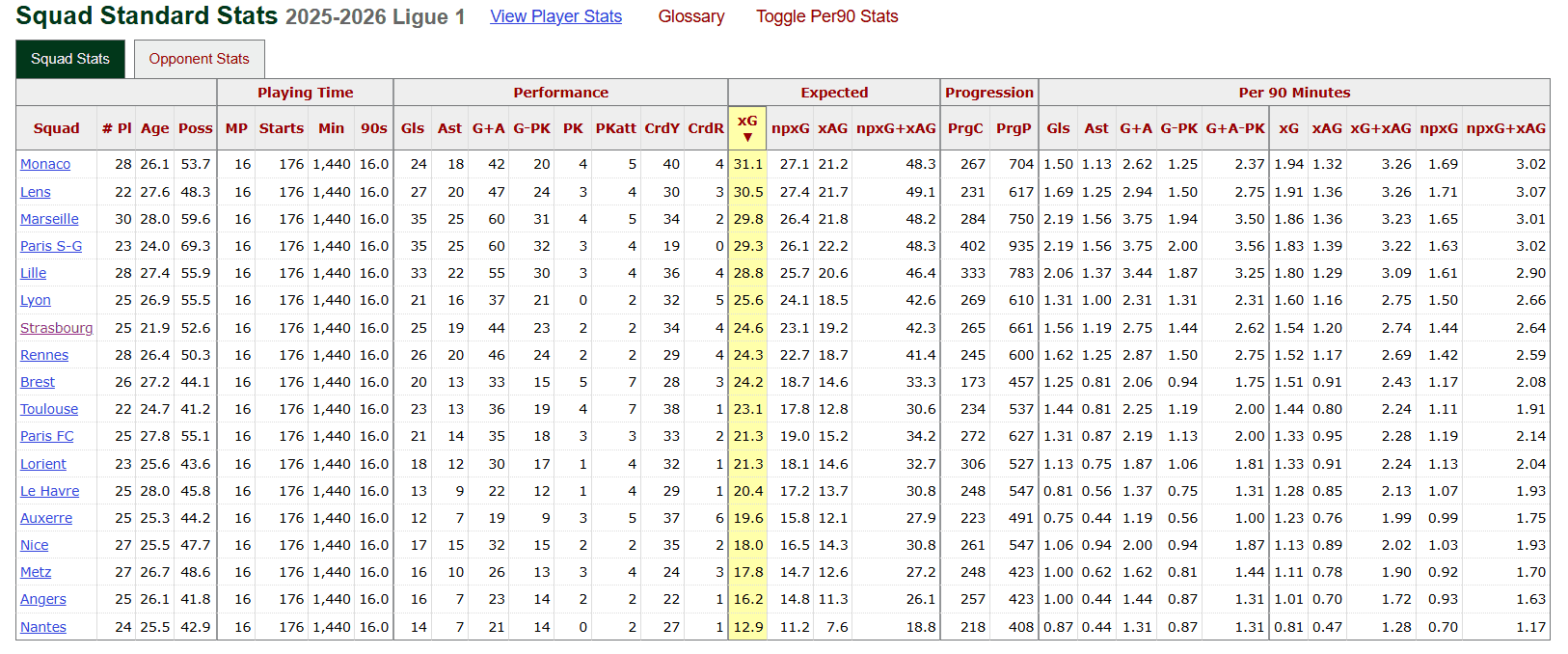
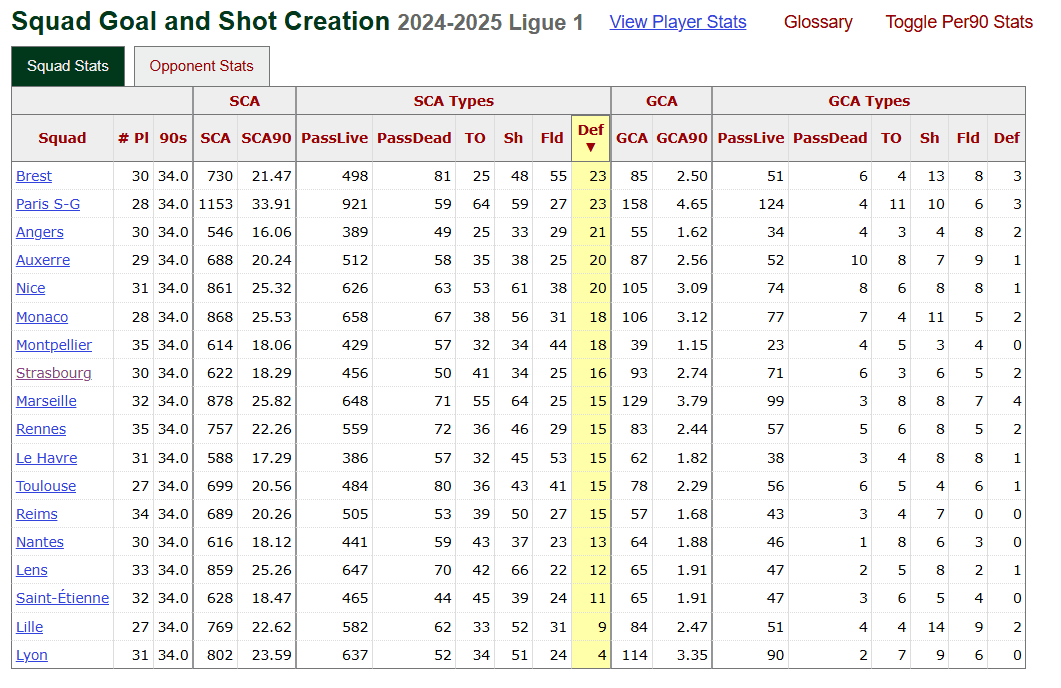
They rank 7th in the league for xG , not far from being 10th in the league, so they don’t create the most chances in the league, it was a similar story last season as well with them 7th in the league for xG. They are also15th in the league for Shot Creating Actions (Set of actions that lead to a shot on goal). It’s not really the most encouraging as an attacking force, but lets not forget this isn’t the best 3 teams in the league in terms of squad composition and they have been punching above their weight despite the investment in the summer who weren’t on established buys like other Ligue 1 teams could do. But it gives insight into how the team is on the ball. Its something that you wonder if better attackers would change that
OFF THE BALL
Strasbourg are a very aggressive side off the ball. The aim is to retrieve the ball quickly and high up, it is a staple of Rosenior’s style of play as winning the ball high is a huge part of how they create chances. Lets quickly see that from the stats.
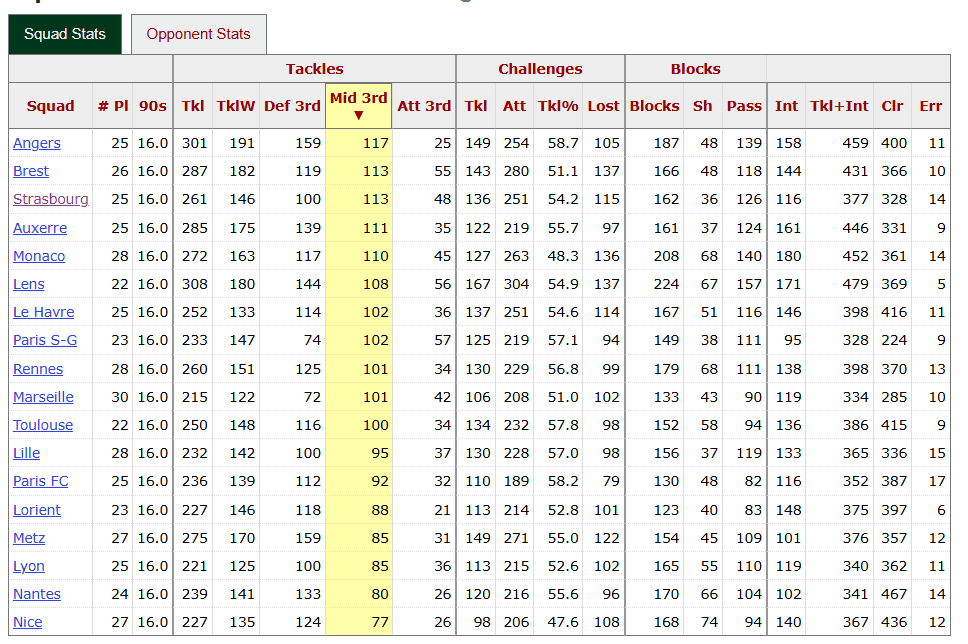
Strasbourg are top 3 for tackles in their middle third and 4th for tackles in their attacking third which means they are one of the best teams at winning the ball high up. Watching them, they quickly turn those ball wins to chances created with quick vertical passes and crosses or cutbacks for the ST to score. They also rank fairly high for Shot creating actions from ball wins
They do that using an aggressive Man-to-Man press, and they start by staying in a 4-4-2 mid-block, meaning one of the wing-backs or Wingers becomes the left or right wide midfielder. They are drilled to mark particular players, each player has a man to mark, similar to Maresca’s M2M pressing philosophy, which means that even if a CB has to mark an attacker that drops really deep, he follows the attacker.
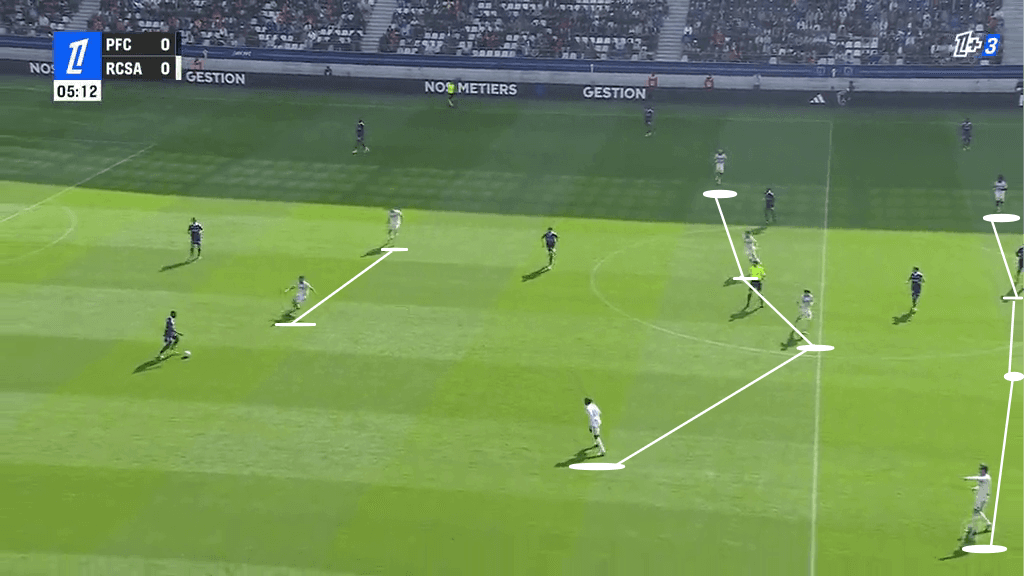
Here is Hojsberg following his attacker deep into this own half to press. Its not new to the team as the Chelsea team has done it even too much at times under Maresca.
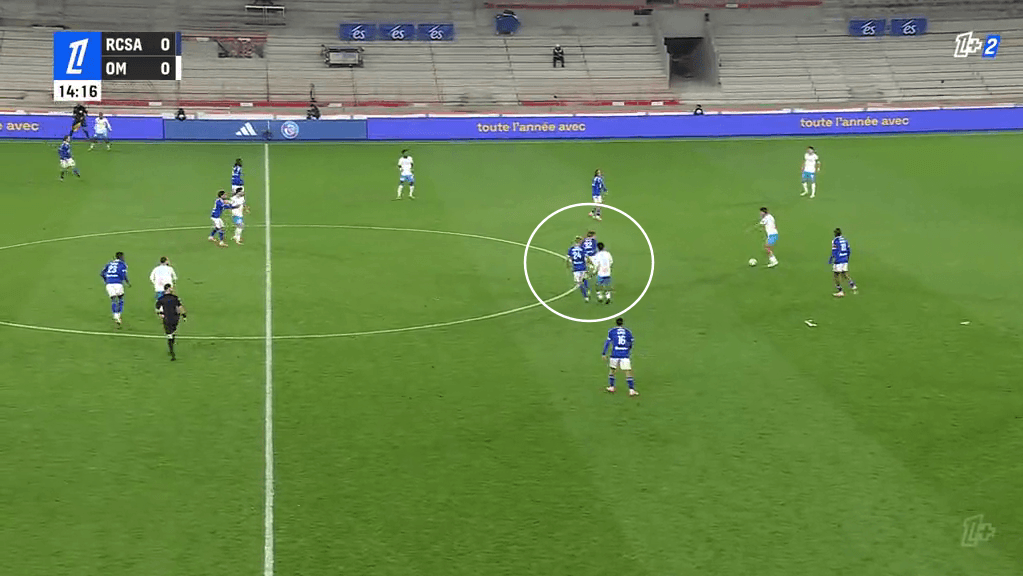
A significant difference between Rosenior and Maresca, amidst other things, lies in the way they approach their mid-low block. Rosenior also uses a 5 a the back with a wing back or winger dropping deep to help shore up the defence but it can be formed by either that or a DM dropping into the defence to form the back 5. But another difference is the fact that Rosenior uses a more zonal mid-low defensive block approach than a M2M approach when they are defending. At that point, players aim to stay in a narrow 5-3-2 shape rather than continue to press M2M.
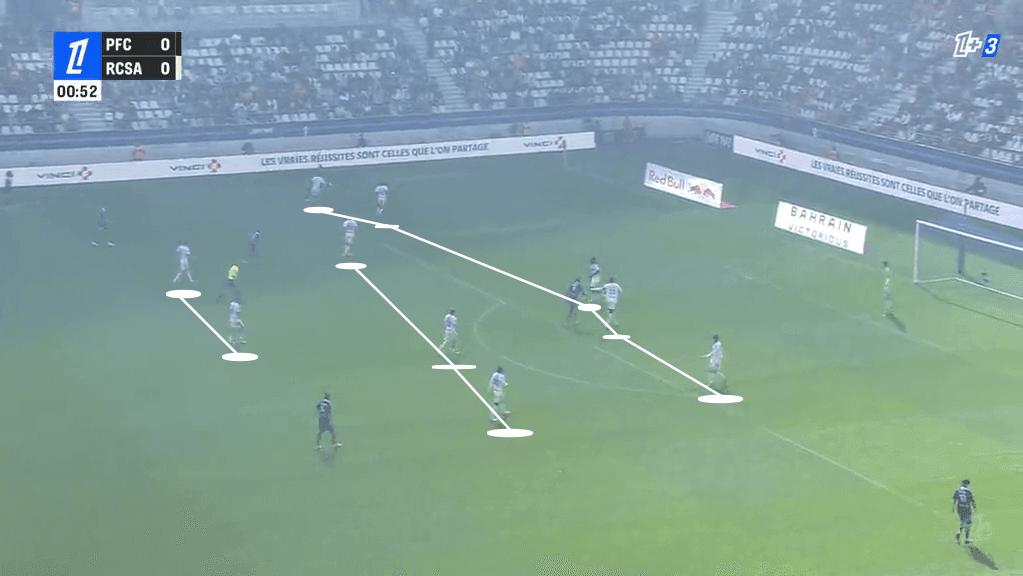
Figure : 5-3-2 Mid-Low block
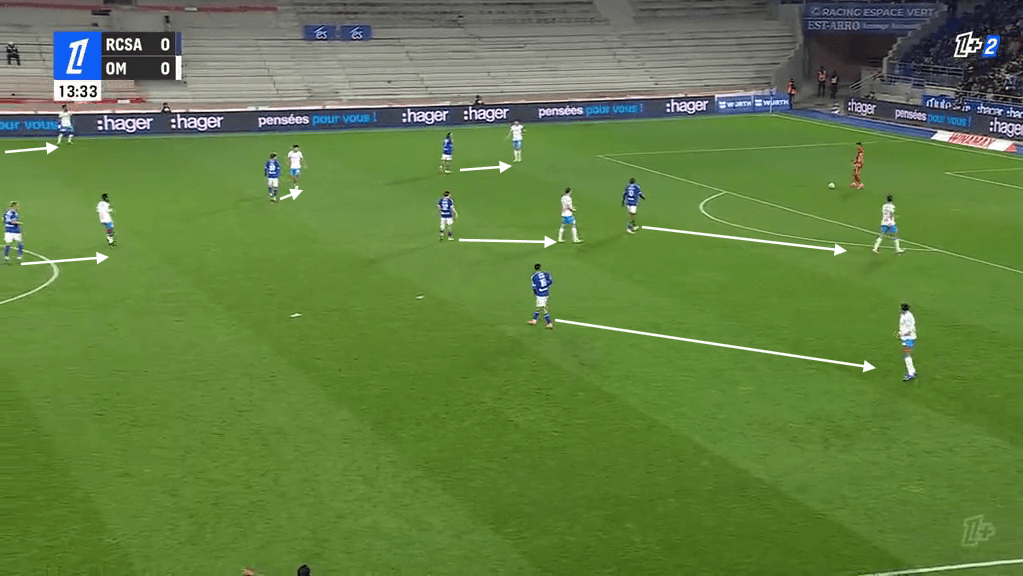
Now that’s something I have been calling Maresca to do since the players pressing M2M even in defence especially with the fitness required for it that we don’t have now as lots of players are knackered. Issues with this apart from having the required fitness to pull it off consistently playing every 3 days is also when players lose their man or lose their duels. Chelsea have suffered from whilst defending this way.
There are some issues that I’ve seen from the zonal block from Rosenior. It can be passive, opposition players that play in the pockets can find space to receive the ball as they don’t have a particular man marking them, just players in the closest zones can go after them, but quality players can use that space to hurt you, I think it can be too passive, this also means a bit more space in the zone in front of the box 18 (Zone 14) for teams to shoot from. It’s not the biggest chance they are giving away as it encourages low quality shots but its something to be aware of.
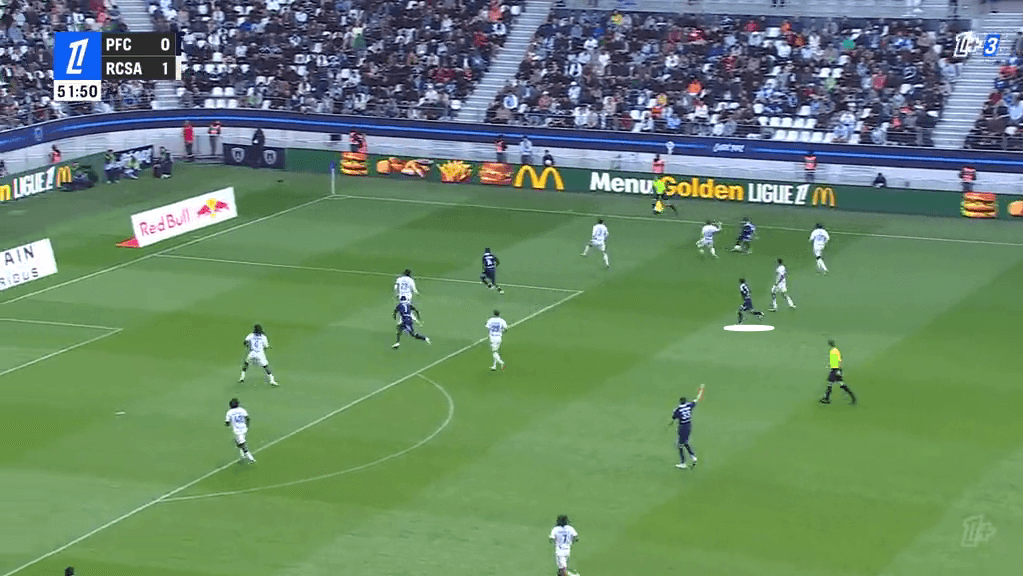
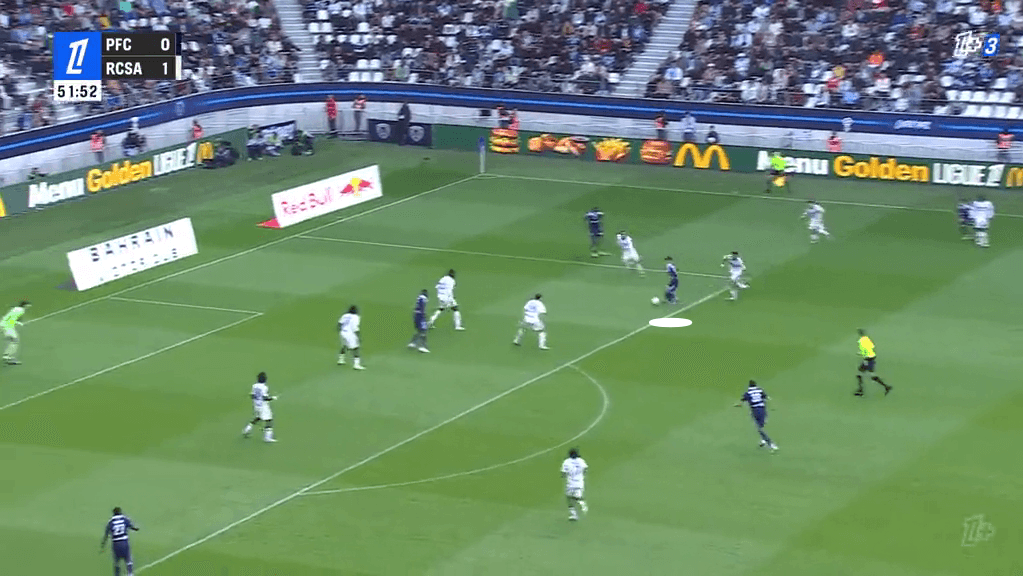
A zonal deep block will probably save the legs of Chelsea players not to track their men every single time. But it has to be more active and not passive, that’s a good difference that could make it better and better ball winners like Caicedo and Santos will help as well in terms of player quality.
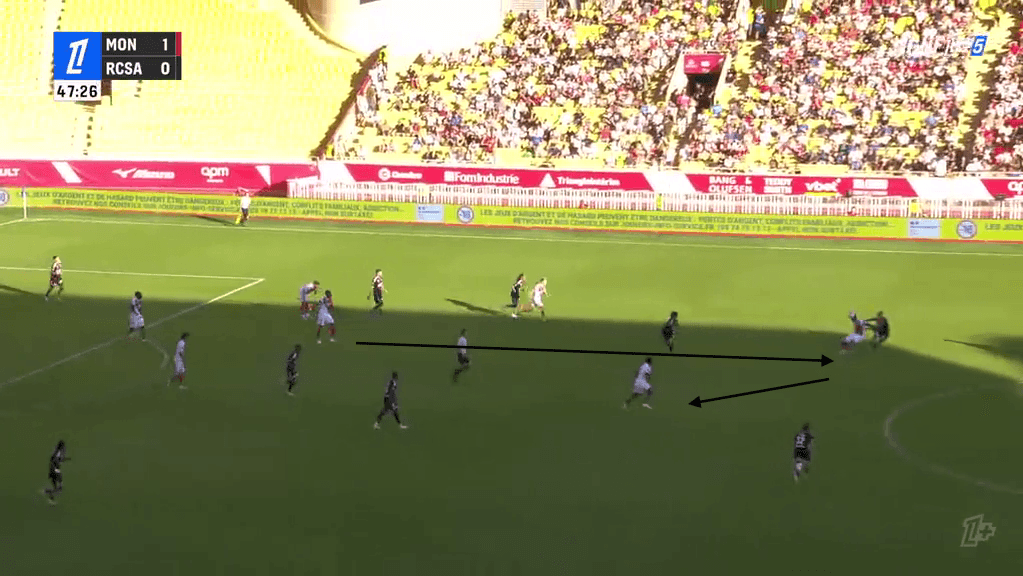
Now also Strasbourg try to win the ball back quickly as soon as they lose it. Especially with a M2M press, it means players are not too far from their men when Strasbourg attack, so they look to win it back quickly and attack, if not, recycle the ball and go again. For example, here, Angers win the ball and try to counter quickly but they are soon trapped by the counter press of Strasbourg.
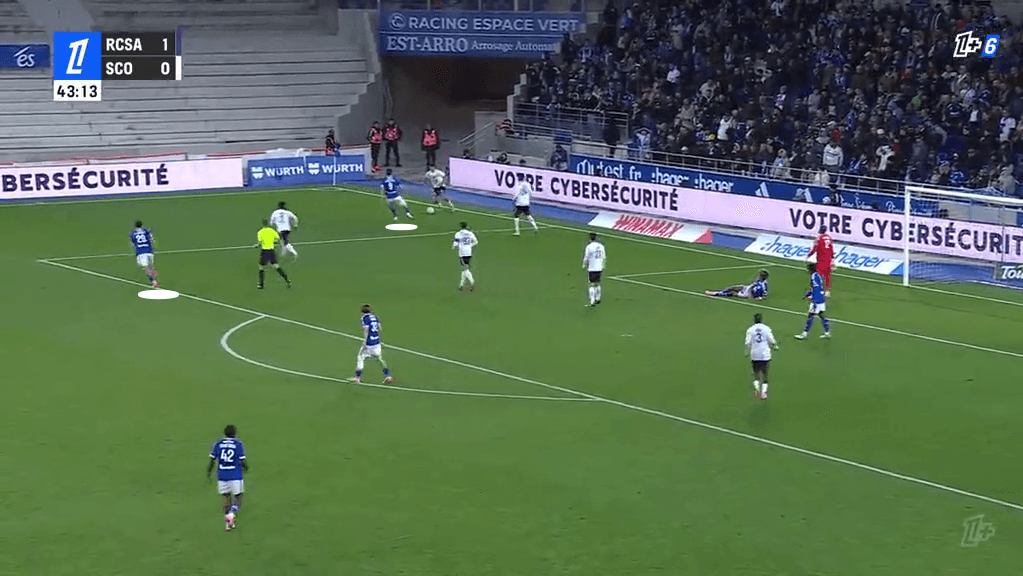
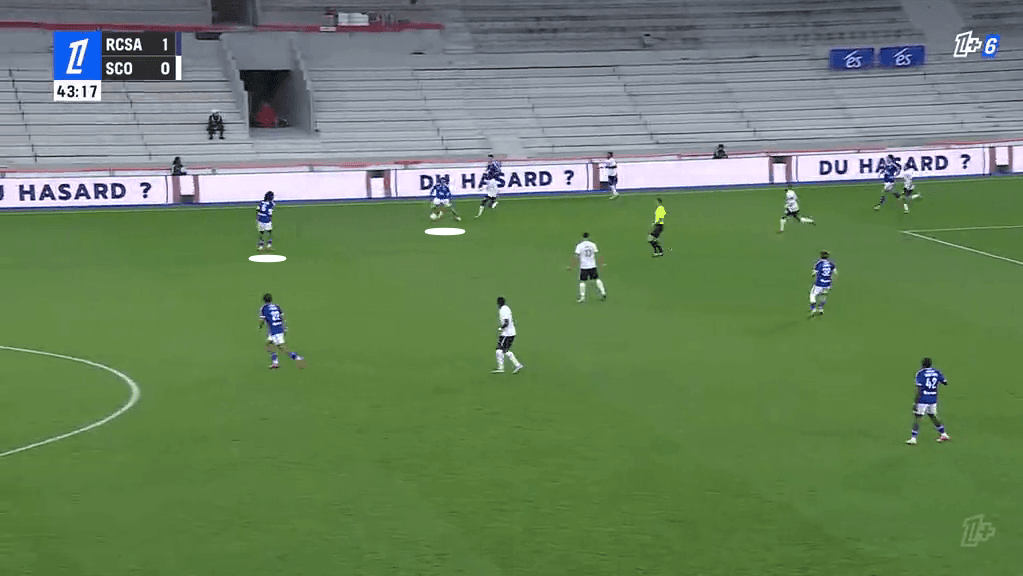
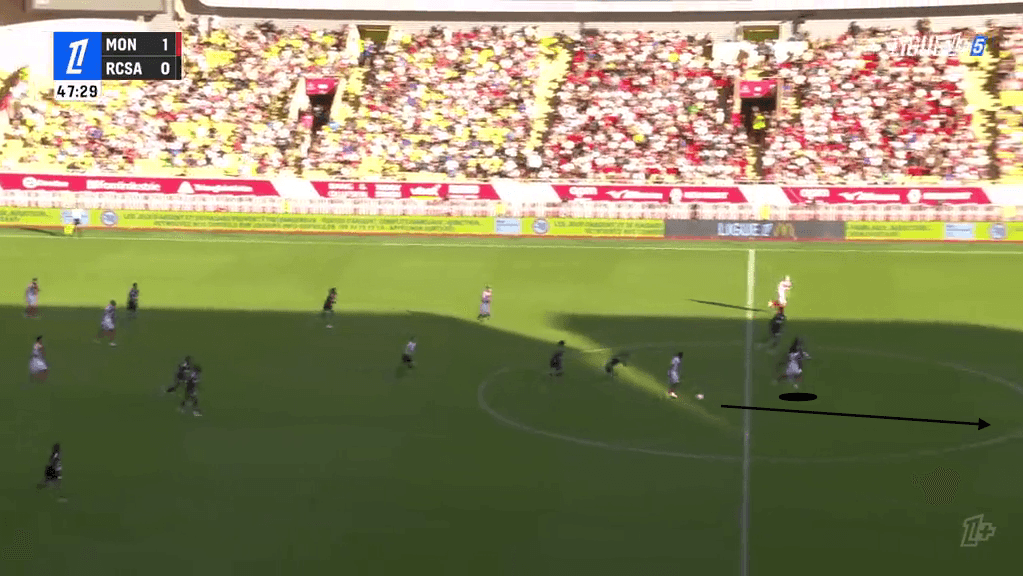
Now it’s a great idea but another reality is how much Strasbourg concede transitions, especially in moments when they are trying to transition themselves, when they are caught out, their players aren’t as tight to the opposition players anymore and there is space to counter, in that case Strasbourg try to delay the opposition or stick a boot in but the lack off reliable midfield ball winners and physicality mean they struggle with it.
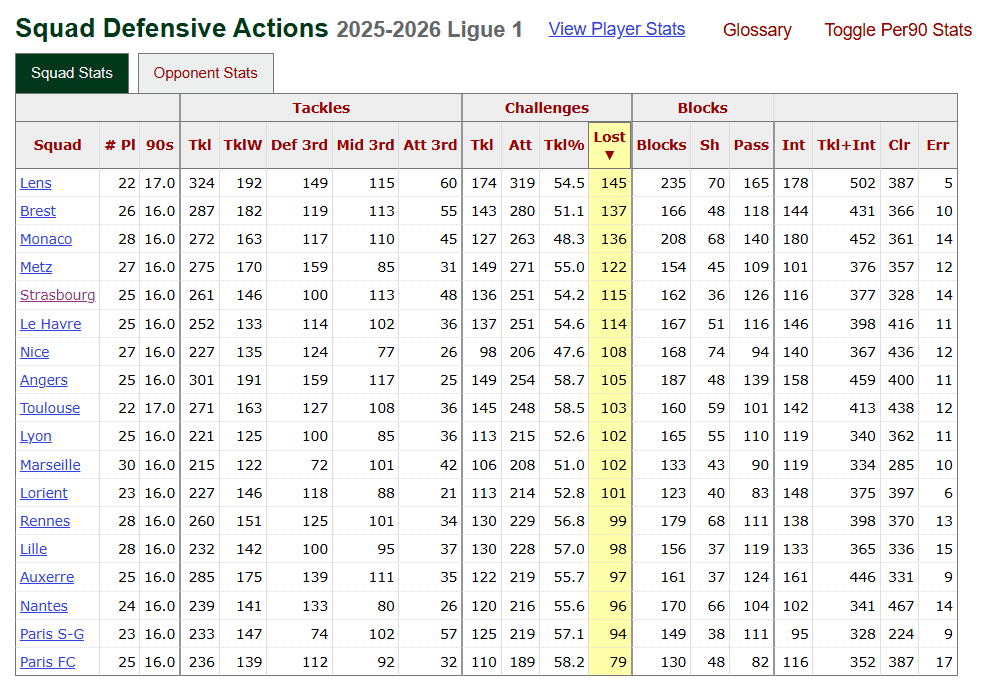
The stats also tell the story, Strasbourg are top 5 in Ligue 1 for unsuccessful challenges, showing how many times they do go for the tackle but they struggle to win enough of them, more physicality in the middle of the park will help massively with this, something Chelsea are suffering from, its why Maresca uses James in midfield alongside Caicedo, especially with Lavia not fit.
Strasbourg also keep a high line as a result of pressing high, and teams try to exploit their high line with direct balls in behind them, and since there isn’t a dominant defender who mops these up regularly, they’ve struggled with it this season.
But also, Strasbourg interestingly rank third on the xGA table in Ligue 1, so in comparison to the rest, they are doing well defensively and limit most teams to lower quality shots; they concede high quality shots when teams hit the space behind them, as I explained with the counterattacks and when they make build-up mistakes.
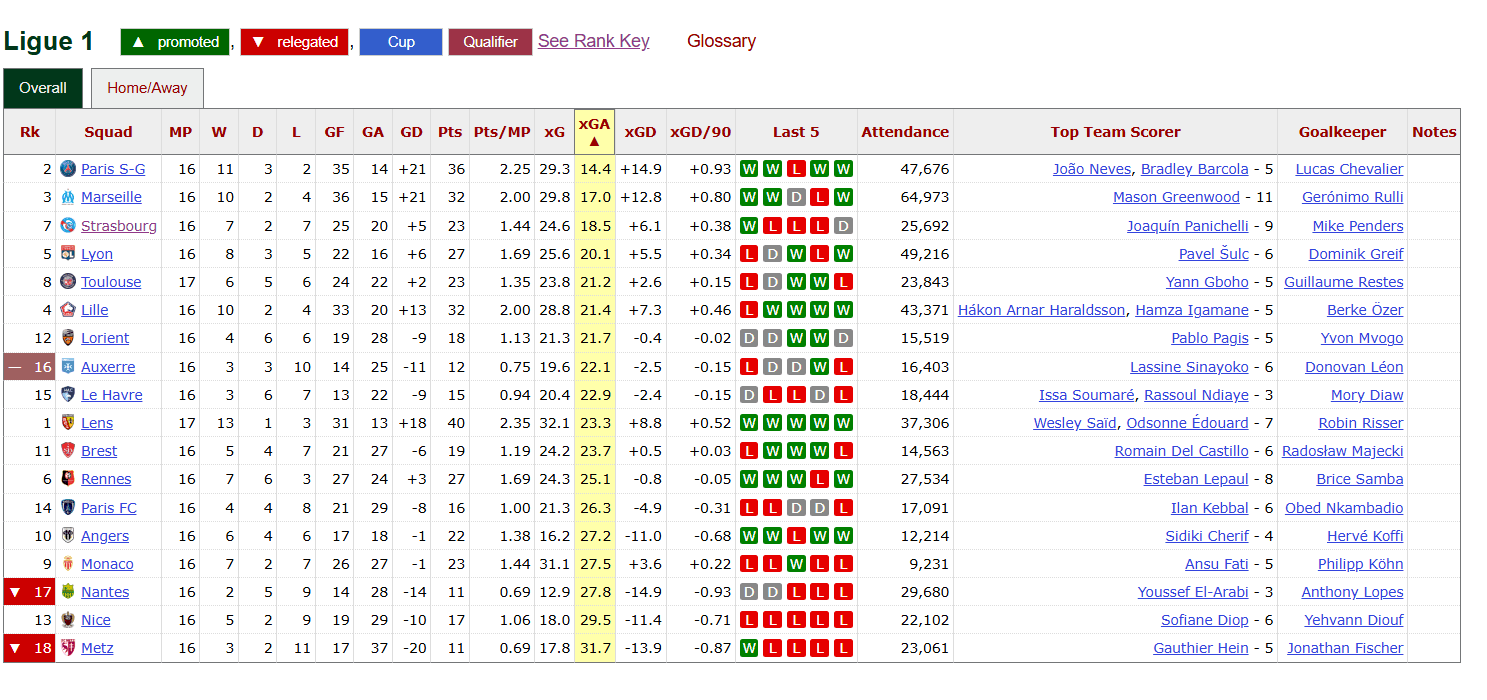
Figure :xGA Table Ligue 1.
How Chelsea players could fit into this
Its always tricky to predict how a coach could use a new squad, but by the way he uses his previous squad, you can get some ideas Coaches like Rosenior usually adapt to the needs of the players in their team and go from there to implement their philosophy.
Chelsea have 4 wingers first of all, at Strasbourg, Rosenior used a lot of wing backs as the widest players in the shape. But what people aren’t mentioning is the fact that when he had Bakwa he played with a 4 at the back in his previous season to fit the wingers he had. Moriera played LB but in attack he was basically a winger.
Rosenior will use wingers since we have them and since he likes his players having lots of take ones, they should play but they will track back and defend, it will be interesting how he fits them into a shape. Players like Liam Delap will relish the ability to receive early passes in behind and crosses into the box where he can actually attack as Rosenior’s attacking play is all about early crosses, crosses and cutbacks and attacking space quickly, so his movement will also need tuning. Enzo Fernandes will relish playing those early passes for Delap or his wingers in behind as Rosenior’s team also focuses on lots of through balls. Andrey Santos will definitely relish playing ore games as he is also important to Chelsea through his ability to receive under pressure and play forwards and provide adequate defensive cover for the team. Liam will certainly trust him much more than Maresca.
For his style of defending, of course Fofana would be very important, because he likes progressive passes from CB and being the only left footed CB fit, Badiashille has a case to play much more despite his shakiness. He would have to adapt to Sanchez a little bit to avoid playing short all the time, as Sanchez improved when he was asked to play long, which relieved pressure on himself.
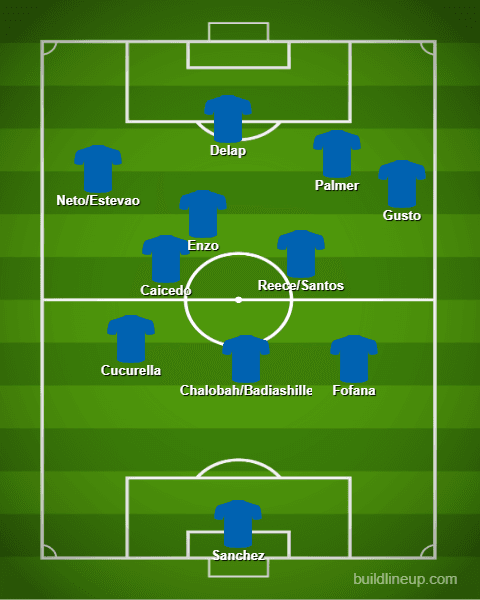
A possible Rosenior XI with our currently fit players could look like this
Sanchez, Gusto, Fofana, Chalobah/Badiashille, Cucurella, Caicedo, Reece, Enzo, Palmer, Estevão/Neto, Delap
INTANGIBLES
In terms of qualities off the pitch, Rosenior can bring to Chelsea is his ability to manage players, which is already lauded as a huge strength of his. His ability to motivate players and learn all about them is something he makes a point to do. He communicates to each player whether they are playing the next game or not and why. He says, “The players will respect it in the long run”. He is also very familiar with the Clearlake structure and has worked with some of his superiors before. He is very outspoken both on the touchline and in press conferences; given that he’s English and knows how to speak, he can communicate with the media as well. Time will tell if he can manage the pressure cooker, which is Chelsea, if he loses multiple games on the trot or when/if he wins a trophy, he wants more like Maresca did in terms of a say in transfers and even on the pitch like a normal coach would.
Will he sink or swim? Only time will tell.
.jpg&w=1920&q=75)