3 TACTICAL THINGS WE LEARNT FROM LIAM ROSENIOR’S FIRST CHELSEA GAME AGAINST CHARLTON

3 TACTICAL THINGS WE LEARNT FROM LIAM ROSENIOR’S FIRST CHELSEA GAME AGAINST CHARLTON
Liam took his new Chelsea team out for their first outing in the FA CUP and won 5-1 against Charlton. It was a comfortable outing which is expected against a lower division team. There were similarities between Liam’s style of play and Maresca’s the 3 at the back, 2 wingers which were probably the consequence of playing a lower league team but it paints a very fair picture of how this team would look to play and line up under the new head coach. I’ll point out 3 tactical ideas Liam showed in his first game as Chelsea boss.
ROSENIOR WANTS HIS DOUBLE PIVOTS TO CLOSE
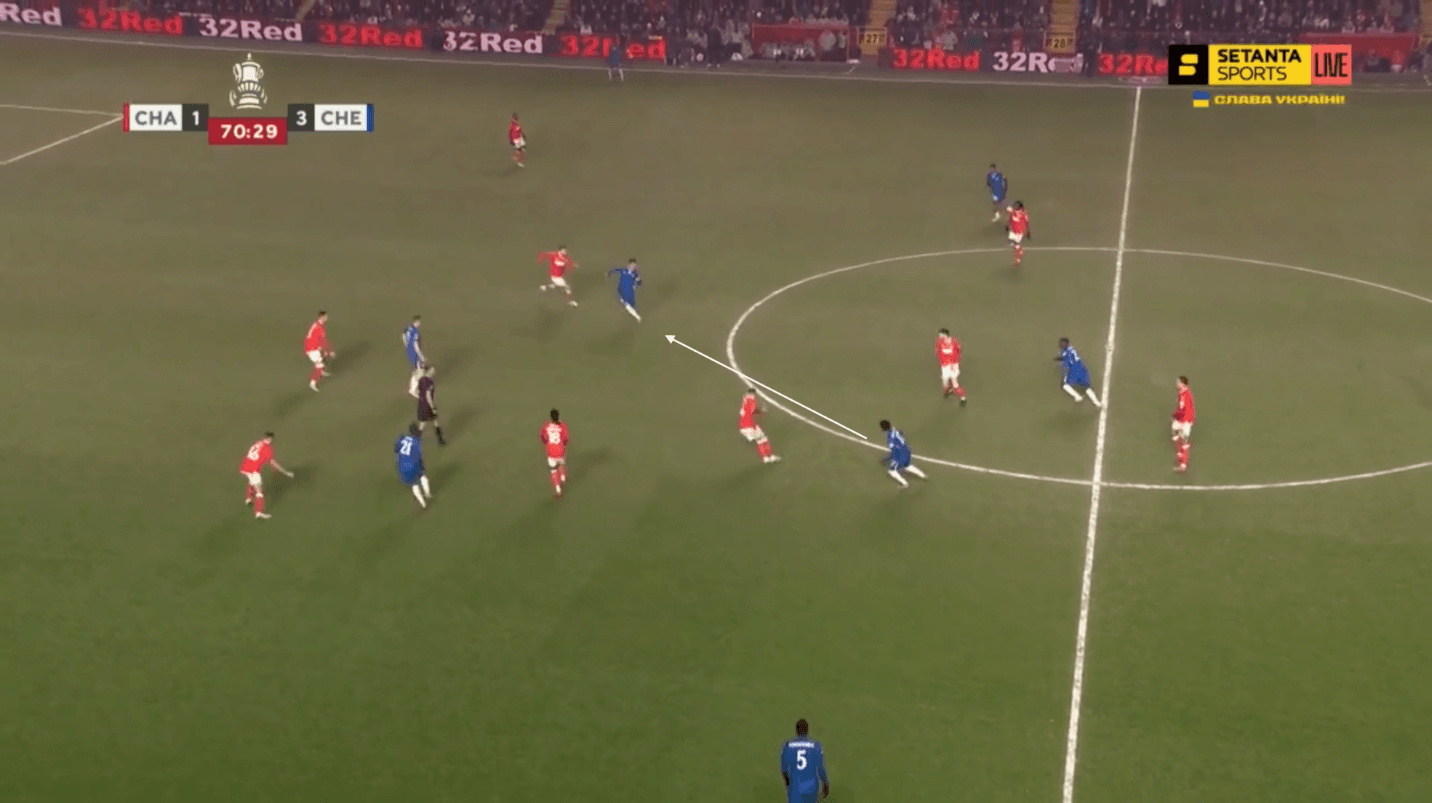
This was evident from the start of the match. Caicedo and Santos started the game as the pivot pair and stuck like glue as they looked to receive the ball from the CBs/GK and progress the ball. They don’t only stay close to each other, they play bounce passes to each other all the time to draw out pressure and find the spare third man between the lines of out of it, they look to play 1-2 passes (Give and goes) to play out of pressure.
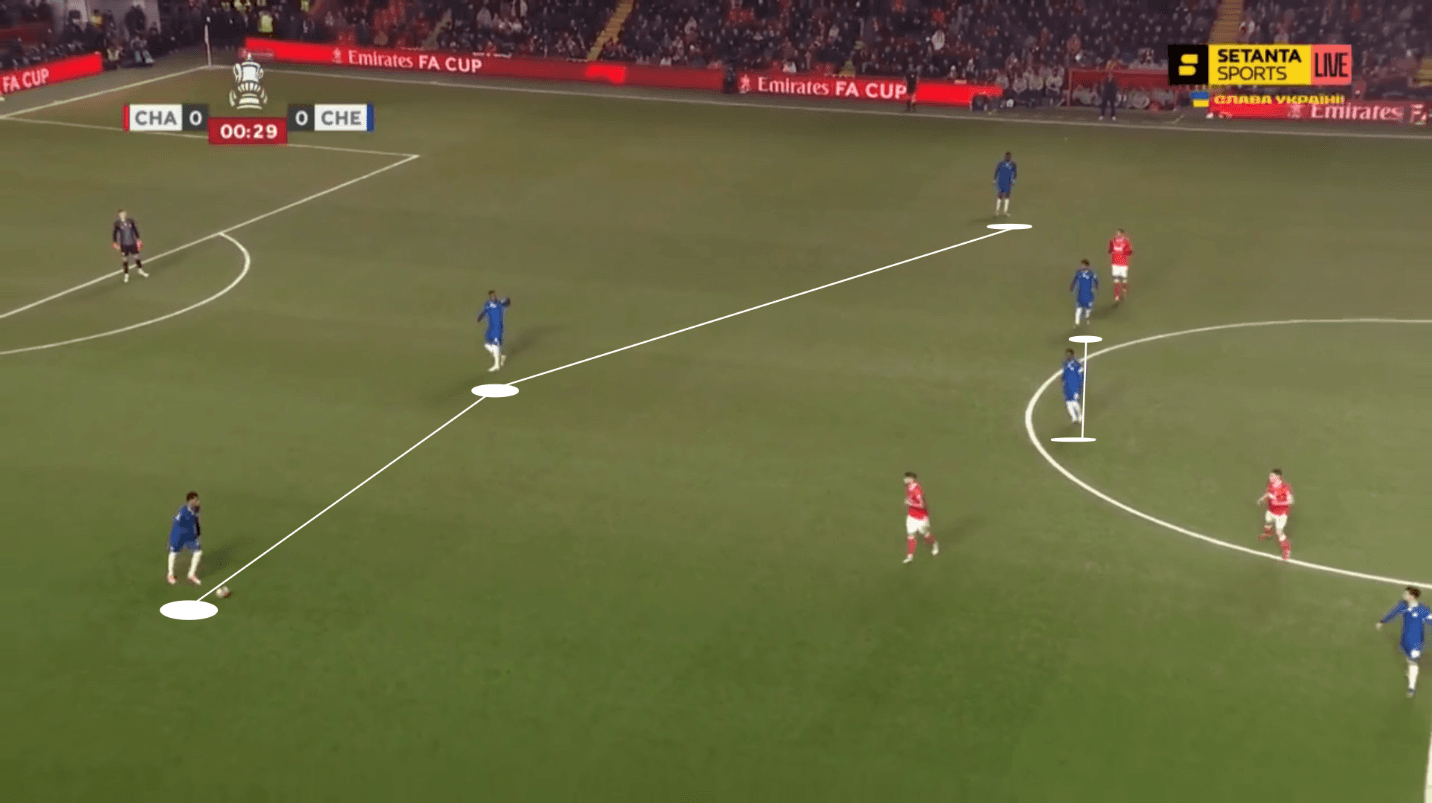
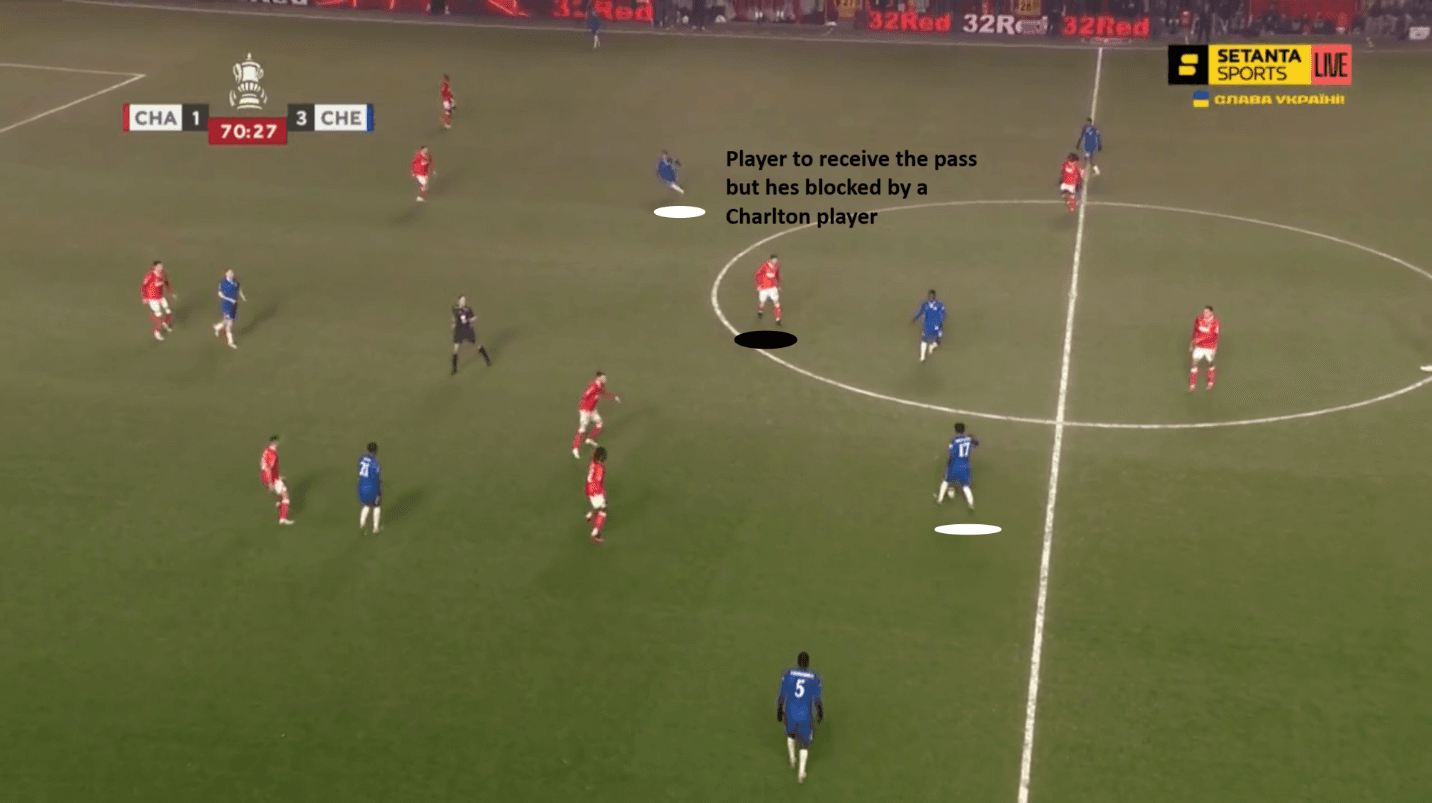
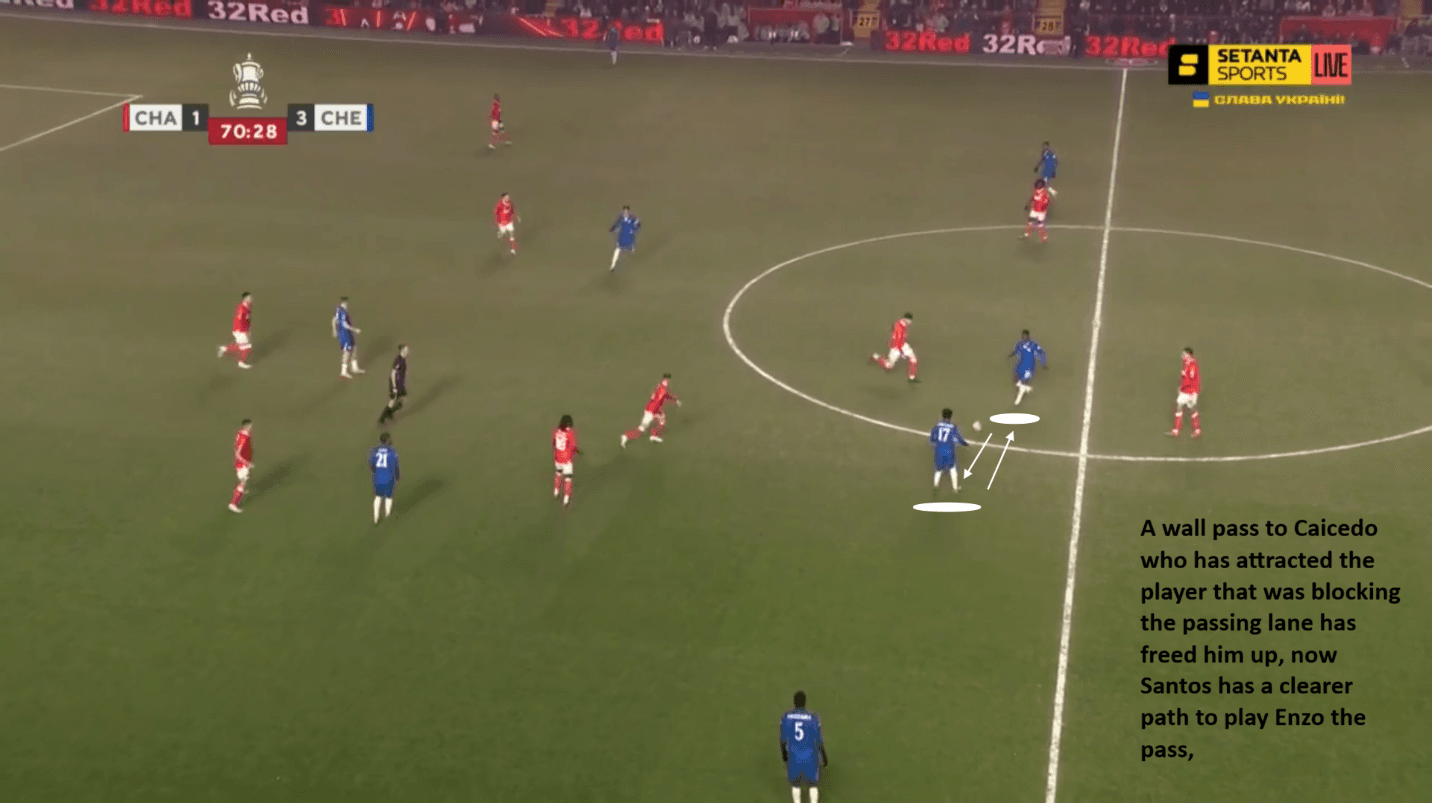
Play usually started with the CBs finding the pivot and they attracting pressure with the bounce pass and opening a passing lane to find the rest of the 10s in the box midfield or the ST, and then the play quickly accelerates with one-touch passing and finds its way to the wingers who find themselves 1v1, which Rosenior considers a switch of play through the lines. For example, the passing lane to Enzo was blocked by Santos with the ball, a bounce pass from Santos to Caciedo drags the man out who was marking, and the passing lane becomes open, and Santos then finds that progressive pass
FULLBACKS WILL STILL INVERT
There was a consensus that Maresca's use of inverted fullbacks doesn’t suit them. Still, with Rosenior, especially after reading the piece on his tactics on the site, he will continue to use inverted fullbacks. Hato played similarly to Cucurella under Maresca, who would invert into the Right Half Space (RHS) to be the left attacking 8/10.
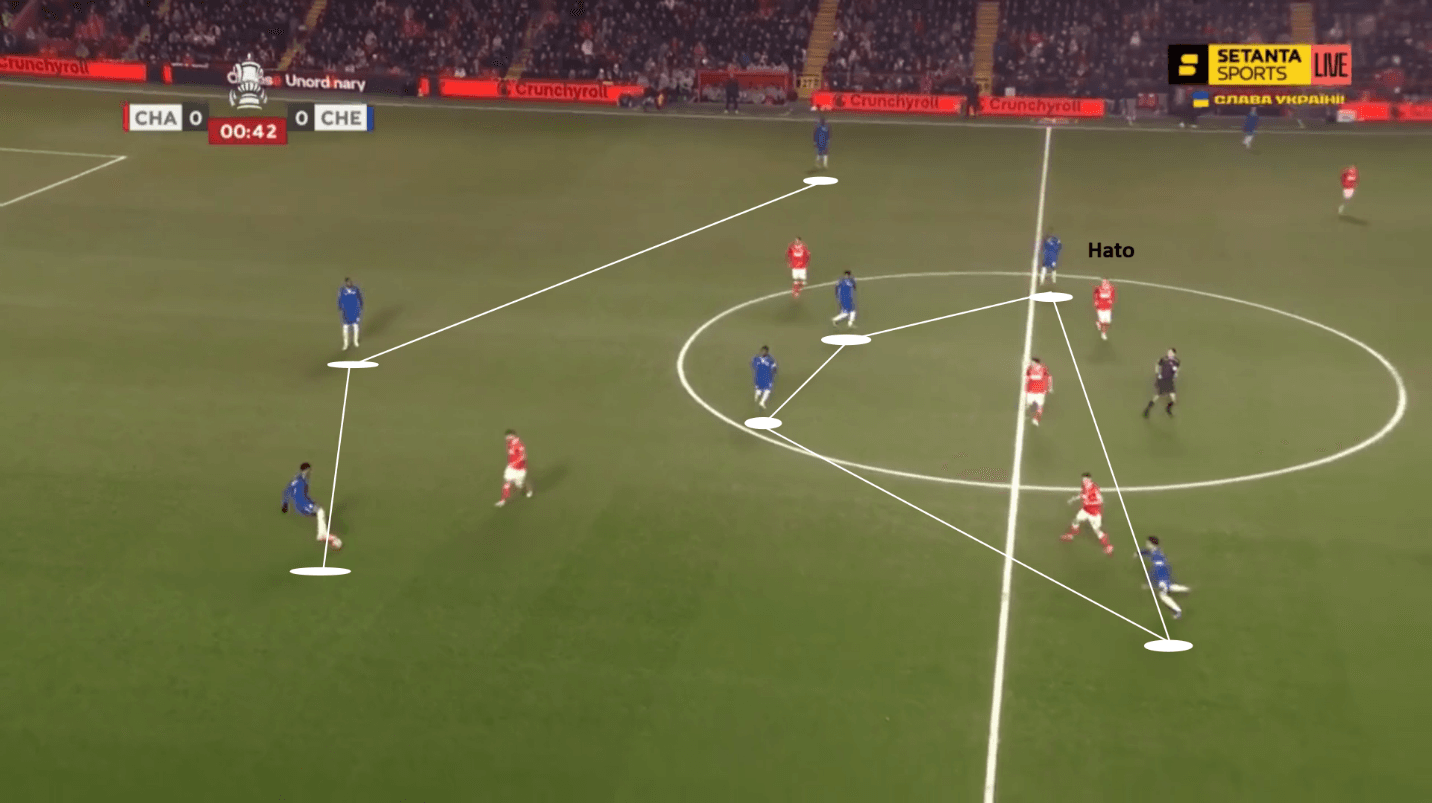
He impressed with his ability to hold the ball in tight spaces and under pressure. He used his physicality very well and was able to be in that exact position for his goal, with good ball striking. He made runs and was a menace as a 10, he's played well since Maresca left and is finding the fresh slate of trust beneficial for his confidence.
OVERLOADS /THIRD MAN RUNS
Similar to Maresca, Rosenior loves his overloads. Maresca used a 3-1-6 against back 5’s and 3-2-5 against back 4s so he can have an overload on the opposition’s last line of defence. Rosenior does it a bit differently, he uses a 3-1-6 at times, but not specifically against back 5’s.
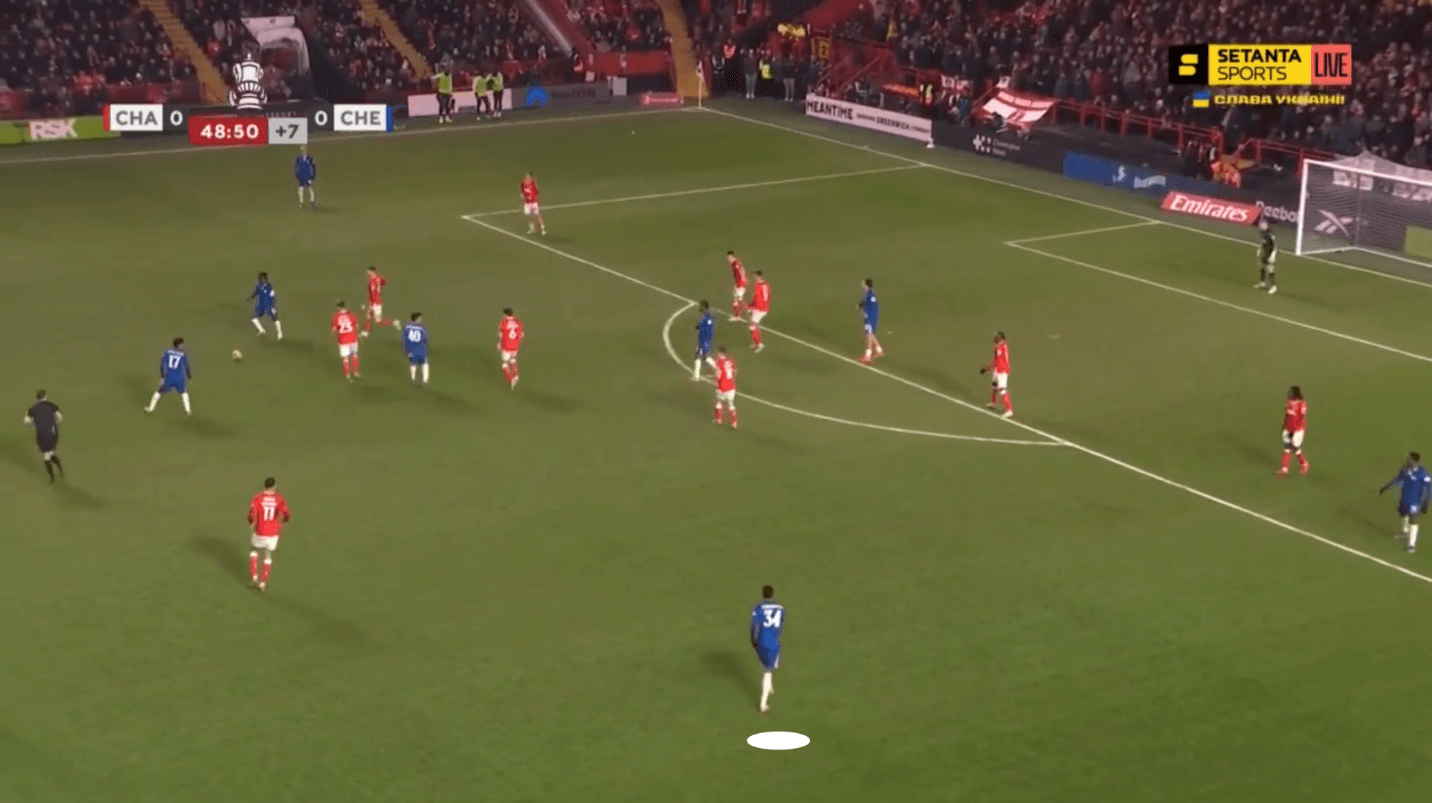
Against Charlton, he used a 3-2-5 shape against Charlton’s 5-3-2 mid-low block shape, but when Charlton’s original 2 strikers dropped deeper, Chelsea took advantage and took the space available.
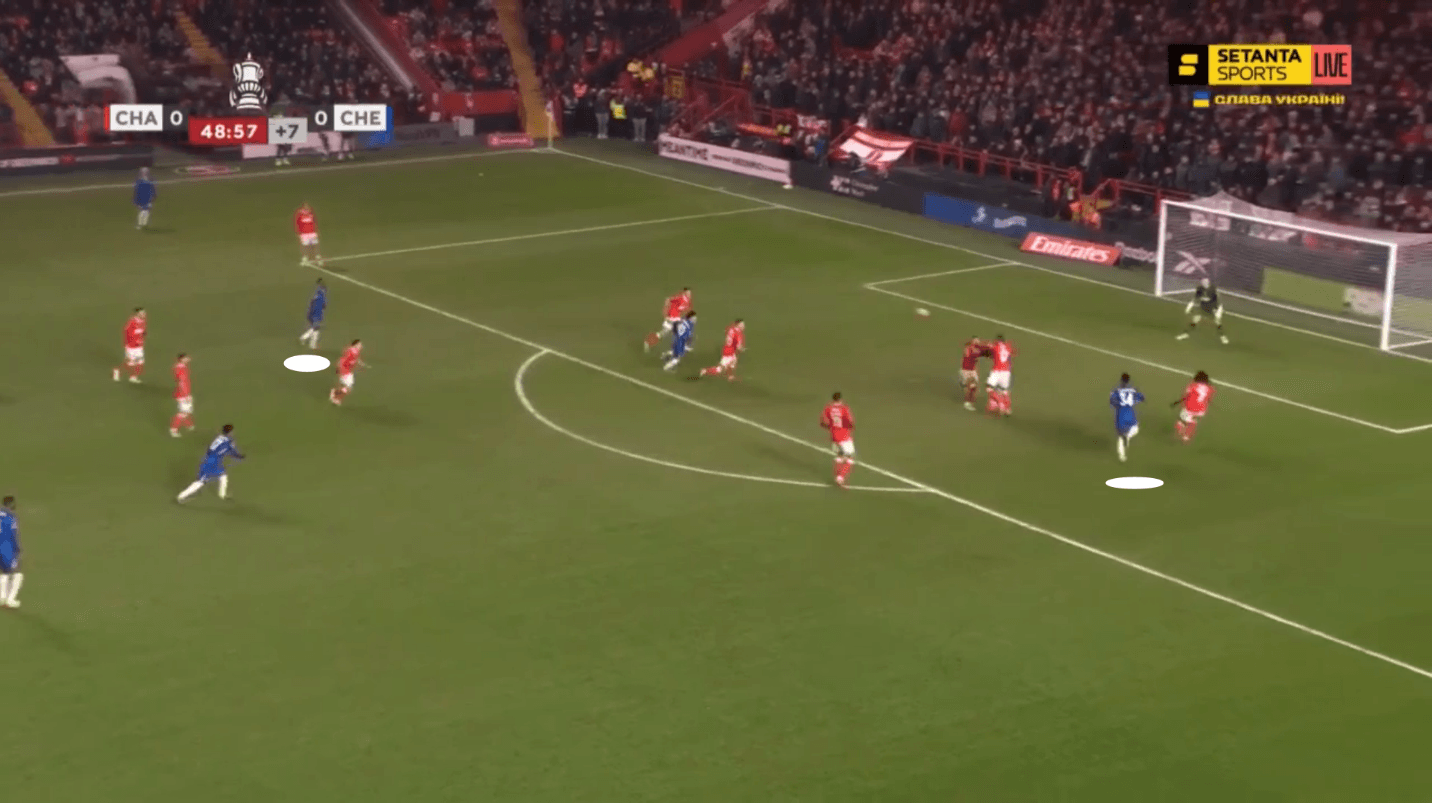
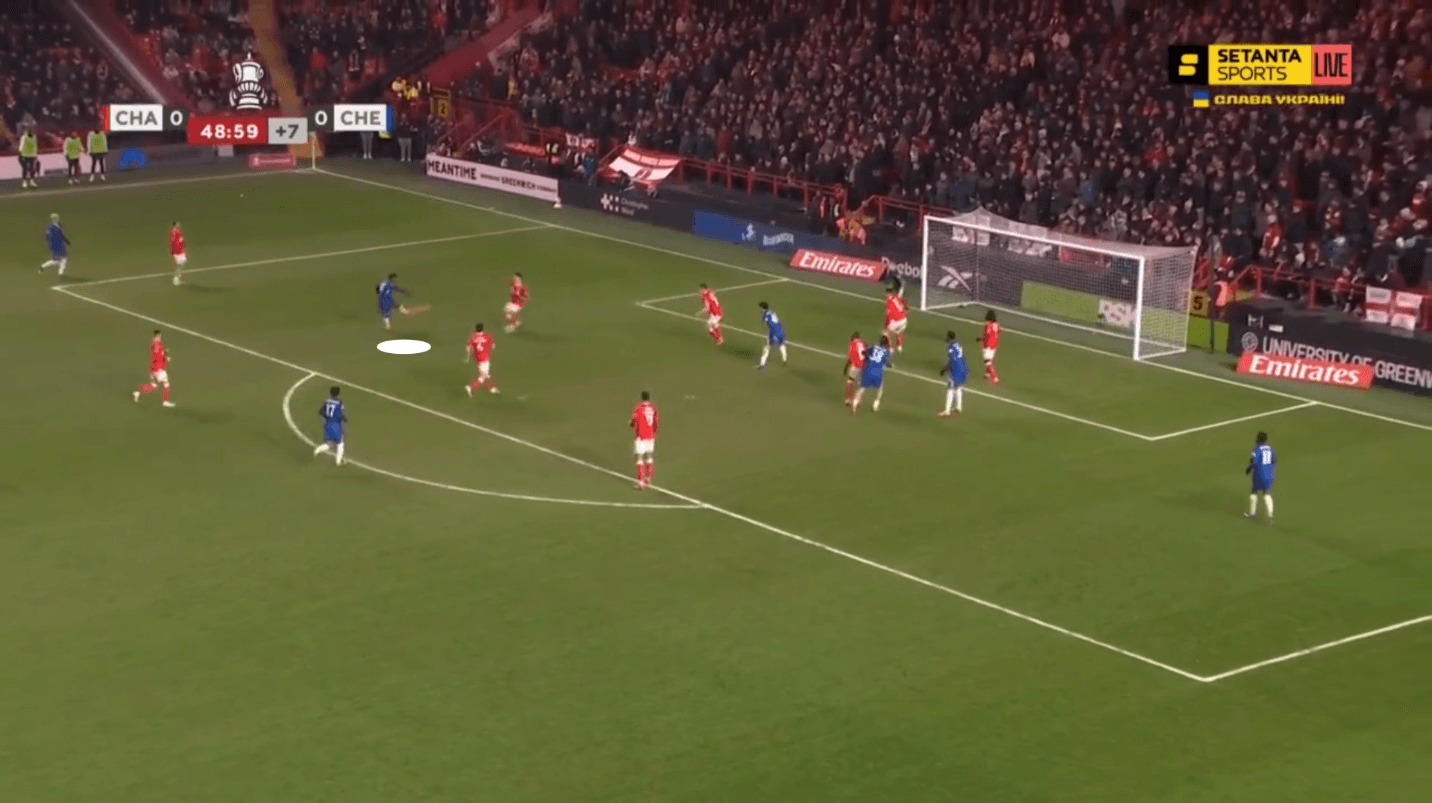
For example, when Charlton pressed with 1 Forward, Chelsea pushed Acheampong up to support attacks with late runs. When Charlton pressed with 2 Forwards, it was a 3 at the back; when it was with no forwards, Badiashille also took the space forward on the left. This meant Chelsea had numbers in attack to create overloads and attack, but also importantly meant Chelsea also had enough numbers back to deal with counterattacks and the counterpress.
This was evident for the Hato goal. Joash had pushed up as Charlton only had one man up front, if you count the number of Charlton players in the picture, you can see a 5 at the back and 4 midfielders, the other forward (11) has dropped deeper and Acheampong goes behind him to make a run into the box, it takes the attention of the rest of the CBs when the cross comes in and Hato is left free for the rebound.
We hope these become transferable against better opposition, as that comes immediately against Arsenal on Wednesday.
.jpg&w=1920&q=75)